OTTAWA- The Justice Centre for Constitutional Freedoms announces that a motion to strike all or part of the ongoing class action proceeding against “Freedom Convoy” protestors was filed on December 30, 2022. The motion is scheduled to proceed today and tomorrow.
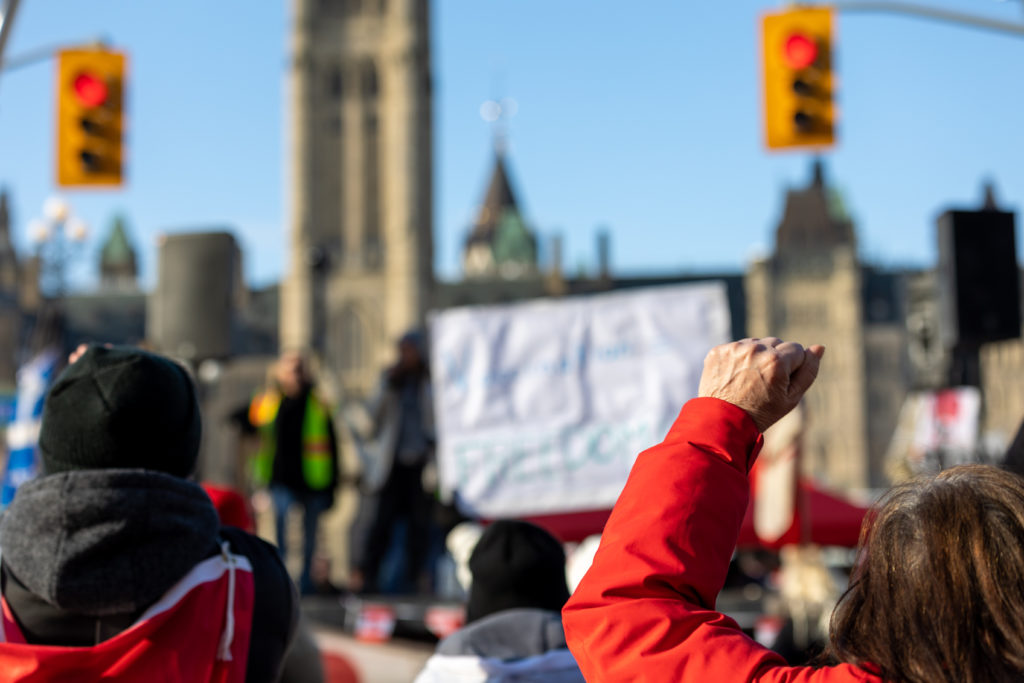
Last February, several Ottawa residents and businesses commenced a $290-million class action lawsuit against various defendants, including the Freedom Convoy protestors, for allegedly causing a nuisance through honking or idling of vehicle engines during the protest that took place in Ottawa last winter.
The motion argues that the class action has been improperly pleaded by “lumping together” all protestors who were in Ottawa in January-February of 2022 and treating them as a single unit. It also argues that the plaintiffs have not named a specific defendant that was alleged to cause harm to a specific plaintiff, nor have they named defendants that have a reasonable chance of success at trial.
The motion argues that it is improper for the plaintiffs to point to a general group of people and say they should be held responsible, without specifying who did what that caused the alleged harm, and when.
The plaintiffs have also named as defendants all those who donated money to the Freedom Convoy after February 4, 2022, arguing that all those donors “knew or ought to have known” by that time that their donations would be used to commit the alleged harm to the plaintiffs. Counsel provided by the Justice Centre, James Manson, argues that the so-called “donor class” of defendants also cannot be “lumped together”; rather, in order to determine each and every donor’s intention, the court would have to examine evidence with respect to each and every donor’s particular circumstances. The plaintiffs would have to prove that the intent of each donor was for the truckers to cause the alleged nuisance. This would be impossible to determine.
“It is critical in every lawsuit for a plaintiff to properly plead his or her claim, so that defendants, and the court, understand the allegations and the issues raised,” said Manson. “Our view is that this lawsuit, as currently pleaded, fails to achieve that important goal. Accordingly, the court should exercise its supervisory powers and strike out the claim as currently drafted. We are confident that our arguments today will give the judge a lot to think about.”