Recording banned at public meeting
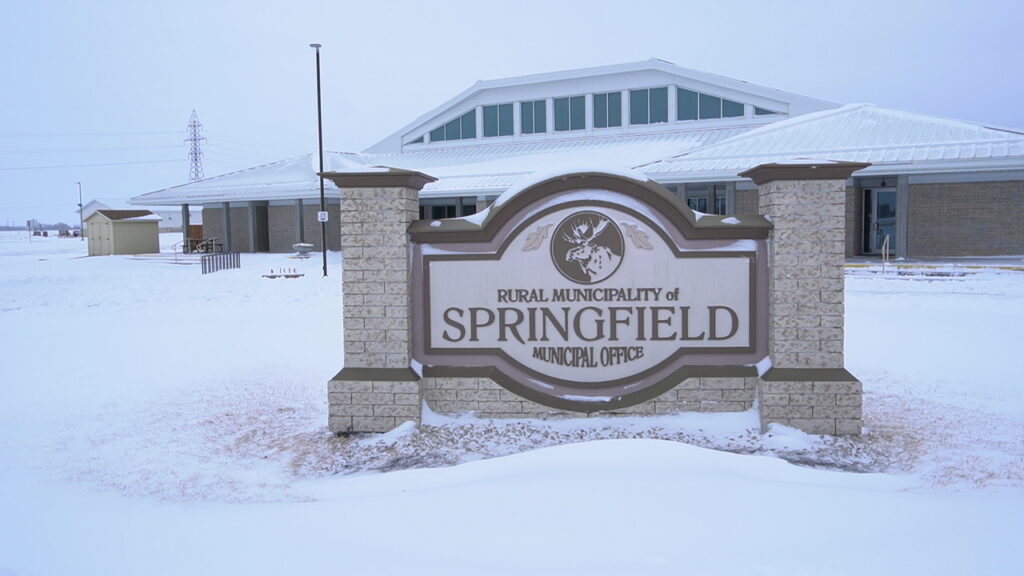
On February 4, 2025, a Springfield resident attended a regular council meeting in the Rural Municipality (RM) of Springfield, Manitoba. Wanting to share important local information with others, the resident began recording the meeting on their phone.
Mayor Patrick Therrien quickly intervened, telling the resident they were not allowed to record because of a new bylaw. The municipality’s Chief Administrative Officer, Colleen Draper, further explained that “media” could only record meetings if they had arranged permission 48 hours in advance through her office. Ms. Draper said that the RM Council would publish its own audio recording within two days.
While members of the public were prohibited from recording in person, Mayor Therrien added that remote attendees on Zoom could record the meeting—a contradiction that only deepened the confusion.
No legal basis to restrict public recording
Following this incident, lawyers provided by the Justice Centre sent a formal warning letter to the RM Council on March 20, 2025. The letter stated that the Municipal Act requires councils to act only through bylaw or resolution—and that there was no bylaw in force that prohibited public recording. The letter also warned that “a proposed by-law or resolution to completely ban the public from recording meetings would be unconstitutional.”
The letter emphasized that the Supreme Court of Canada has repeatedly affirmed that recording and broadcasting are forms of expression protected by section 2(b) of the Charter. These activities promote transparency, truth seeking, and democratic engagement—values at the heart of freedom of expression.
In this case, the resident involved had not disrupted the meeting in any way. “So long as members of the public record in a non-intrusive manner, RM Council and the Chair have no right to prohibit recording at their meetings,” the letter stated. “We hope that the RM Council considers our warning carefully and acts in a way respectful of Charter rights.”
Legal challenge launched in Manitoba court
Despite the warning letter, the RM Council maintained its position. Now, four Springfield residents have launched a court application at the Manitoba Court of King’s Bench, challenging the Council’s continued refusal to permit recordings.
The application argues that the mayor lacked legal authority to impose a recording ban without a valid bylaw—and that even if such a bylaw were passed, it would be unconstitutional.
“Municipal government should strive for maximum transparency and openness,” said Mr. Leung. “Unfortunately, we are seeing many municipalities across Canada attempt to limit public participation, especially when it comes to recordings done by residents who want to share important updates with their fellow residents.”
“We are asking the Court to uphold this important right to keep local governments accountable, and to allow the free flow of information,” he added.
To get a video summary of this case by lawyer Darren Leung, please click here.
Legal brief filed
On September 18, 2025, lawyers funded by the Justice Centre filed a legal brief with the Court of King’s Bench in Winnipeg challenging the Rural Municipality of Springfield’s prohibition on recording public council meetings.
The application argues that modern technology has expanded the traditional definition of media, and that constitutional protection should focus on the act of newsgathering rather than restricting it to those with formal media credentials.
The brief further contends that Mayor Patrick Therrien acted without lawful authority when he claimed a by-law restricted recordings, despite no such by-law existing.
Local resident Daniel Page, who regularly attends council meetings, emphasized the importance of transparency, stating, “I believe it is essential to have recordings of RM Council meetings for transparency and accountability. This act helps ensure more complete public records exist, whether official or not, and public recordings can be shared to show what actually happened,” he said.
Constitutional lawyer Darren Leung stated, “This case raises a novel issue that has been scarcely addressed by the courts: whether the government can prohibit recording public meetings of elected officials.”
“The court’s decision will set the boundaries of how much government can control the flow of information,” he added.
Court date set for April 30, 2026
The Rural Municipality of Springfield has filed its legal brief defending a bylaw that prohibits members of the public from recording municipal council meetings. The case will be heard at the Court of King’s Bench in Winnipeg on April 30, 2026, and the Municipality’s brief is available below.
In its brief, the Municipality acknowledges that recording council meetings engages freedom of expression, stating, “The Municipality does not dispute that the activity of recording Council Meetings has expressive content and falls prima facie within the scope of section 2(b) of the Charter.” It nonetheless argues that the mayor has authority to prohibit recordings and that the bylaw is a valid exercise of municipal power, claiming either that recording is not protected by the Charter or that any infringement is justified.
Constitutional lawyer Darren Leung, representing the four residents, states, “Recording public proceedings is a form of expression that enables accountability and democratic participation. Preventing citizens from doing so raises serious concerns under the Charter’s protection of freedom of expression.”
Hearing held on April 30
Lawyers funded by the Justice Centre appeared before the Court of King’s Bench in Winnipeg on April 30, 2026, on behalf of four Manitoba residents challenging a bylaw enacted by the Rural Municipality of Springfield that prohibits members of the public from recording municipal council meetings while permitting approved media to do so.
The applicants argue that recording public meetings is protected expression under the Charter and is essential to government transparency and democratic accountability. The Municipality acknowledges that recording is expressive activity but argues the restriction is justified. Government lawyers also intervened on behalf of the Attorney General.
The Court reserved its decision.