Across Canada, indigenous land acknowledgements are now routinely imposed on audiences at all kinds of public meetings. With few exceptions, this relatively new practice has not been debated or approved by the citizens who are required to sit through these political statements.
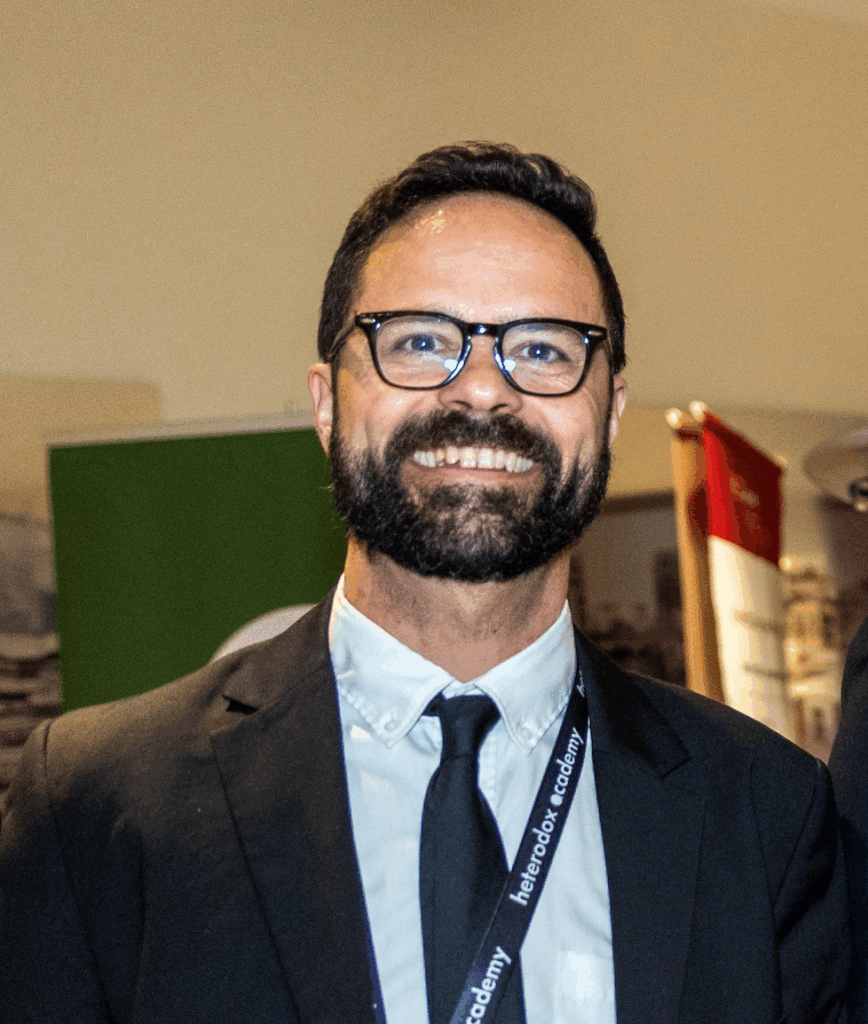
Geoffrey Horsman, biochemistry professor and father of three, is suing the Waterloo Region District School Board over the mandatory imposition of land acknowledgements at school council meetings. Prof. Horsman has been told that territorial acknowledgements will continue to be part of school council and WRDSB gatherings, and that questioning the validity of this “equity-focused initiative” would risk undermining “the dignity of members of our community.” In other words: Debates about political issues shall not be allowed if they risk causing offence.
Many Canadians see land acknowledgements as hypocritical virtue signalling by people who have no intention of giving their own supposedly “stolen” land to aboriginals. Like other Canadians, proponents of land acknowledgements will sell their property to the highest bidder. They won’t give their land or their homes away to aboriginals for free on the basis of the land having been “stolen.”
Land acknowledgements elevate one group of Canadians as worthy of special recognition, over and above other Canadians whose ancestry might be European, Asian, African, or some combination of the foregoing. They are political statements which divide Canadians based on race, ethnicity, ancestry, or descent. They repudiate the principle of “Equal rights for all, special privileges for none.”
Land acknowledgements often include inaccurate claims about “unceded” territory. In fact, aboriginals did cede their territories by way of treaties that formalized the sovereignty of the British Crown over the lands that are today Canada. And in British Columbia, where there are mostly no treaties, the situation is more complex than it is often portrayed.
Land acknowledgements presuppose that massive waves of non-aboriginal immigration into Canada, from the 1500s to the present, are a mistake. Canadians of Chinese, Polish, British, Punjabi, Nigerian, and French ancestry are asked to feel guilty about living in Canada.
The idea that non-aboriginal immigration into Canada was a mistake is based on a naive romanticization of the past: that aboriginals previously lived in peace with each other, enjoying a utopian life before the Europeans (and later others) arrived. The truth is that aboriginals fought, killed, tortured, and enslaved each other, as other peoples living on other continents have done throughout human history. Every culture has its dark side. Human nature is a complex mixture of good and evil. Aboriginals have the same human nature as other people.
Indigenous land acknowledgements depend on intergenerational guilt: “because we stole their lands.” But who is the “we” in 2025? Is there even one Canadian alive today who “stole” land away from aboriginals? Forcing people to pay for the sins (real or alleged) of their great-great-great-great-great-great-great-grandfathers will not bring social harmony or reconciliation between Canadians of different ancestries.
If the principle of intergenerational guilt was applied to today’s Germans and Japanese, they would be forced to pay for the atrocities that their ancestors committed during World War II. This would not bring justice to the victims of that war, or to those who waged it.
Imposing land acknowledgements on Canadians at public meetings violates the Charter’s requirement that government entities practice neutrality in relation to different political and religious beliefs. Decades ago, Canada’s public schools ended the practice of reciting the Our Father (the Lord’s Prayer) in classrooms because it was deemed unfair to impose this practice on the children of atheists, Jews, and other non-Christians. In 2015, the Supreme Court of Canada ruled in Saguenay that a mayor could not open city council meetings by reciting a Catholic prayer.
The same doctrine of state neutrality should apply to land acknowledgements, which are political, ideological, and even quasi-religious statements. Mandatory land acknowledgements compel Prof. Horsman and others to sit through a statement that contradicts their belief in the inherent dignity and equality of all people.
Further, the WRDSB ’s prohibition on parents discussing land acknowledgements obviously violates freedom of expression as protected by the Charter, and is completely contrary to the constitutional principle of democracy.
John Carpay, B.A., LL.B., is president of the Justice Centre for Constitutional Freedoms (jccf.ca).