
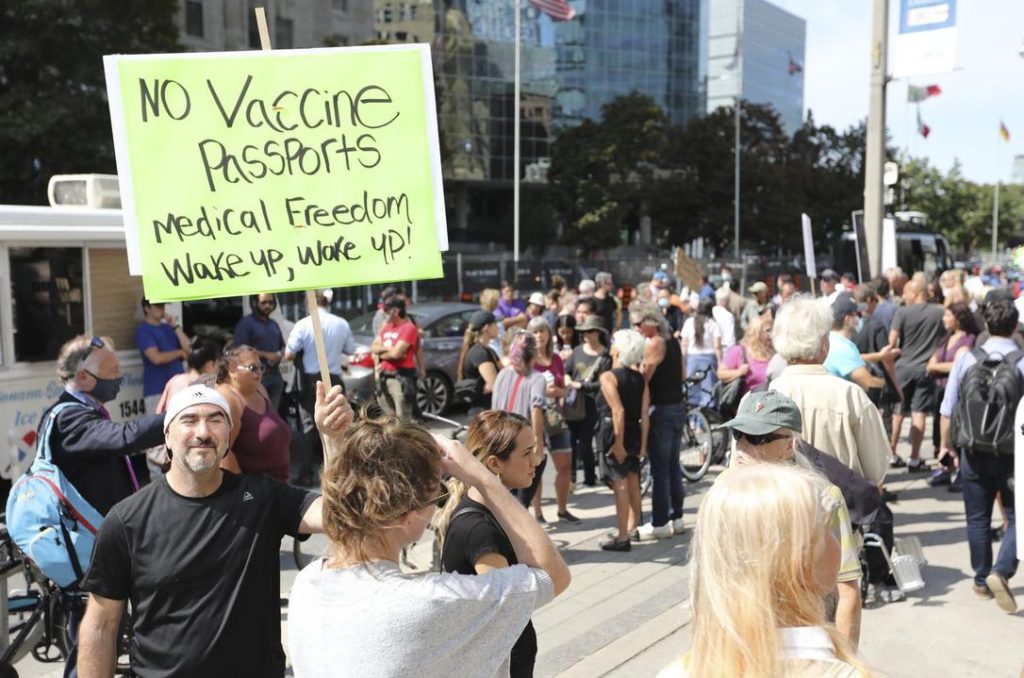
Toronto: After successful negotiations between the Justice Centre and the Crown Prosecutor, the Crown has withdrawn criminal charges against our client “R.B.” for allegedly obstructing police while attending a peaceful protest against Covid-19 restrictions which took place on February 13, 2021 in Toronto.
The Canadian Charter of Rights and Freedoms protects Canadians’ right to peaceful assembly and protest. One Saturday in February, R.B attended a peaceful, outdoor protest at Queen’s Park in Toronto alongside some 10 to 20 others who had gathered to protest Covid-19 restrictions implemented by the Ontario Government.
With the restrictions on outdoor gatherings that were in effect at the time, peaceful protesters were being ticketed under the Provincial offences Act which would not result in a criminal record.
R.B. was criminally charged with “obstructing a Peace Officer” contrary to section 129 of the Criminal Code of Canada for continuing his peaceful protest after being asked by the police to leave the area. Obstruction charges can be laid if someone makes it more difficult for a Peace Officer to carry out their duties. Charges under the Criminal Code are, in general, much more serious than charges under the Provincial Offences Act and can result in a criminal record.
Parts of the peaceful protest and the arrest of R.B. was caught on video and posted on YouTube. The videos showed that at the time of the arrest the number of police officers at the scene was larger than number of protesters, and that the protestors were generally distanced from each other. These videos were a key factor in the Justice Centre’s ability to negotiate a favourable outcome for our client.
After successful negotiations, the Crown used its discretion to offer R.B. an “informal diversion” which resulted in the charges being withdrawn in exchange for a small charitable donation.
“In the last two years, we have seen several protests such as those in support of Black Lives Matter, Pro-Palestine protests, and protests in support of First Nations children who were tragically lost in the residential school system. Gathering in peaceful assembly to express views, to advance causes and to voice dissatisfaction against the government are all protected under the Charter,” says Justice Centre Staff Lawyer Sayeh Hassan.
“We are pleased to note that the Crown properly used their discretion not to prosecute our client for peaceful protest during unprecedented restrictions on freedoms implemented under Covid public health orders,” adds Ms. Hassan.