
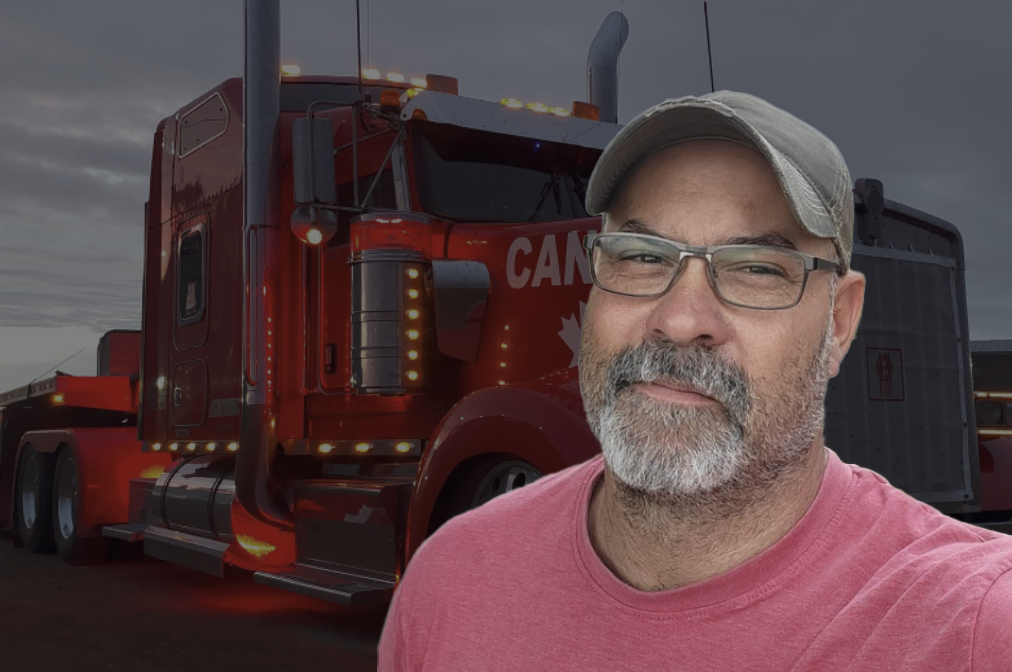
Covid vaccine mandates sparked the Freedom Convoy
In early 2022, thousands of Canadians travelled to Ottawa to protest Covid vaccine mandates and other government restrictions.
Across Canada, people who declined Covid vaccination faced consequences that included losing their jobs, being suspended from university programs, and being prevented from travelling. Cross-border vaccine mandates had a particular impact on Canadian truckers.
Truckers from across the country drove to Ottawa in what became known as the Freedom Convoy. The Justice Centre sent lawyers to the protest to advise protestors about their constitutional rights.
Among those who travelled to Ottawa was Chris Barber, a trucker and trucking company owner from Swift Current, Saskatchewan.
Chris Barber arrested after participating in peaceful protest
On February 17, 2022, police arrested Mr. Barber in Ottawa, one day before police moved to clear Freedom Convoy protestors from the downtown core.
Three days earlier, the federal government had invoked the Emergencies Act for the first time since the legislation came into force.
Mr. Barber was charged with mischief, intimidation, obstructing a highway, obstructing a police officer, and counselling others to commit offences. He maintained that he had peacefully exercised his Charter freedoms of expression, association, and peaceful assembly.
The Justice Centre funded Mr. Barber’s legal defence.
Criminal trial stretched over 45 days
Mr. Barber pleaded not guilty to all charges.
His trial began in the Ontario Court of Justice on September 5, 2023. Although originally scheduled for 16 days, the proceedings eventually consumed 45 days of court time and stretched into September 2024.
Constitutional lawyer Diane Magas defended Mr. Barber and argued that he had acted peacefully and lawfully while in Ottawa.
In final submissions, Mr. Barber’s defence relied in part on the decision in R. v. DeCaire, another Freedom Convoy case successfully defended by Ms. Magas. The appeal court in that case found that the Crown still had to prove beyond a reasonable doubt that an accused person had actually engaged in mischief. Simply being near other people who might have committed mischief was not enough to justify a conviction.
Court found Mr. Barber guilty of mischief
On April 3, 2025, Justice Heather Perkins-McVey of the Ontario Court of Justice found Mr. Barber guilty of mischief and counselling others to disobey a court order. He was acquitted of intimidation and other charges.
Mr. Barber subsequently asked the Court to stay the proceedings against him.
His legal team argued that he had sought and followed legal advice from lawyers, police officers, and a Superior Court judge about what he could lawfully do during the protest.
Mr. Barber had followed Ottawa police directions about where trucks could park. When police asked him to move his truck, a 2004 Kenworth known as “Big Red,” he complied. His lawyer had also advised him that a Superior Court judge had confirmed that the protest could continue as long as it remained peaceful and safe.
“Throughout the peaceful Freedom Convoy, Chris Barber did what any law-abiding Canadian would do: seeking out and acting upon the best legal advice available to him,” stated John Carpay, President of the Justice Centre. “Chris Barber consistently followed the legal advice that he received from police officers, lawyers, and a Superior Court judge.”
“To hold a well-meaning man behind bars for two years and to confiscate his property, as is now demanded by the Crown, would bring the administration of justice into disrepute,” Mr. Carpay continued. “Crown prosecutors are painting a portrait of a dangerous criminal, even while Chris Barber sought out and followed legal advice when participating in the Freedom Convoy in Ottawa in 2022. Chris worked within the law when peacefully exercising his Charter freedoms of expression, assembly and association.”
The Court ultimately denied Mr. Barber’s application for a stay of proceedings.
Crown sought imprisonment and seizure of “Big Red”
The Crown initially sought a two-year prison sentence against Mr. Barber. It later sought an eight-year prison term and also pursued the permanent forfeiture of “Big Red,” the truck Mr. Barber used in his family trucking business.
Mr. Barber’s lawyers opposed the forfeiture, arguing that police themselves had directed him where to park the truck on Wellington Street and had later approved “slow rolls” as a form of protest. Mr. Barber moved the truck out of downtown Ottawa at the request of police on February 8, 2022, and did not return it to the downtown core.
Constitutional lawyer Diane Magas said, “This truck was never a tool of crime. It is a working truck, directed by police where to park and moved when they asked. Seizing the very vehicle that Chris and his family rely on to earn a living would devastate a legitimate Canadian business.”
Mr. Barber received no jail time
On October 7, 2025, Justice Perkins-McVey sentenced Mr. Barber to an 18-month conditional sentence and 100 hours of community service, to be served in his community.
The Court imposed no jail sentence despite the Crown’s request for eight years in prison.
In delivering her decision, Justice Perkins-McVey remarked that Mr. Barber “came with the noblest of intent and did not advocate for violence,” and emphasized that the Freedom Convoy was a “non-violent protest, no property damage, no intent to harm critical infrastructure.” She also noted that Mr. Barber moved his own truck and encouraged others to do likewise, promoting calm and cooperation with police.
Constitutional lawyer Diane Magas, who represented Mr. Barber, stated that “The Court recognized Mr. Barber’s peaceful conduct and cooperation with police throughout the Freedom Convoy.”
For the first 12 months of his conditional sentence, Mr. Barber was required to remain on his property except for employment, certain appointments, and religious services.
Mr. Barber appealed his conviction
Mr. Barber appealed his conviction and sentence, arguing that the trial judge misapplied the law on mischief and failed to give proper weight to his cooperation with police throughout the protest.
The Crown also appealed, seeking a harsher sentence and asking the appeal court to overturn Mr. Barber’s acquittal on the intimidation charge or order a new trial.
Mr. Barber said, “I travelled to Ottawa in good faith, followed the directions I was given, and cooperated fully with police at every step,” said Mr. Barber. “I did nothing unlawful, and I am appealing to clear my name and defend the right of Canadians to speak and protest peacefully.”
Constitutional lawyer Diane Magas stated, “Mr. Barber relied in good faith on police and court direction during the protest. The principles of fairness and justice require that citizens not be punished for following the advice of authorities. We look forward to presenting our arguments before the Court.”
The Justice Centre continued to fund Mr. Barber’s legal defence.
Court rejected attempt to seize Mr. Barber’s truck
While the criminal appeal continued, the Crown separately sought to have “Big Red” declared offence-related property and permanently forfeited.
Mr. Barber’s legal team opposed the application, emphasizing that the truck remained an essential part of his family business and that Mr. Barber had parked and moved it according to police directions.
The Ontario Court of Justice ultimately dismissed the Crown’s forfeiture application, allowing Mr. Barber to keep the truck he relied upon for his livelihood.
Reacting to the ruling, Mr. Barber said, “This truck is my livelihood. Trying to permanently seize it for peacefully protesting was wrong, and I’m relieved the court refused to allow that to happen.”
His criminal defence lawyer, Marwa Racha Younes, also welcomed the outcome, stating, “We find it was the right decision in the circumstances and are happy with the outcome.”
John Carpay, president of the Justice Centre, said, “This decision is good news for all Canadians who cherish their Charter freedom to assemble peacefully.” He added, “Asset forfeiture is an extraordinary power, and it must not be used to punish Canadians for participating in peaceful protest.”
Mr. Barber’s appeal moves forward
Mr. Barber’s appeal of his criminal conviction and sentence remained ongoing. By September 30, 2026, Mr. Barber’s lawyer will file his written arguments with the Court explaining why his conviction and sentence should be overturned.