
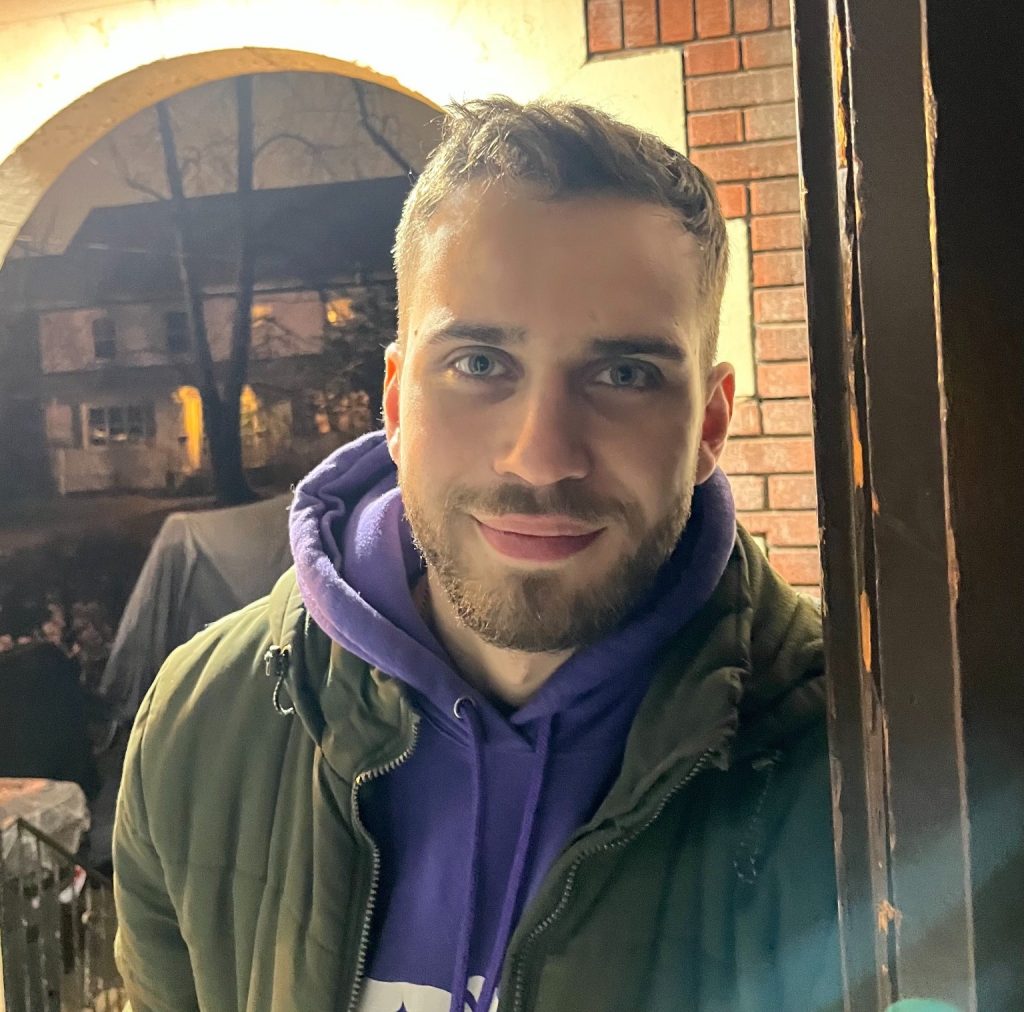
Ontario Tech University denied a student’s request for a religious accommodation
In 2021, Philip Anisimov was studying Industrial Ergonomics at Ontario Tech University in Oshawa when Ontario introduced Covid vaccine requirements for post-secondary students.
Ontario’s Chief Medical Officer of Health required students either to provide proof of Covid vaccination, obtain an approved medical exemption, or complete an educational session about Covid vaccines. While the province permitted universities to offer the educational option, it did not require them to do so. Ontario Tech University chose not to make that option available.
Mr. Anisimov, a Baptist Christian, requested a religious accommodation from the university’s vaccine policy. His religious beliefs prohibited him from receiving the vaccines because they had been tested using cells derived from fetal tissue.
He offered to take regular tests and wear a mask. The university denied his request for accommodation and later removed him from two courses with in-person components, including a mandatory, full-year Capstone course, delaying his graduation by one year.
The experience left him uncertain whether he would ever be able to complete his education.
“I was never sure if I should keep studying, because I didn’t know what would happen,” Mr. Anisimov said. “It was difficult to study, and my mental health suffered because of the institution’s actions.”
He also recalled the university’s response to his request for accommodation.
“I was shocked when they not only denied my religious exemption but began to try to challenge my convictions when it was clear they had no understanding or willingness to understand my faith.”
Mr. Anisimov ultimately graduated in June 2023.
Human rights complaint alleged religious discrimination
Lawyers funded by the Justice Centre filed an application with the Human Rights Tribunal of Ontario on Mr. Anisimov’s behalf, alleging that Ontario Tech University discriminated against him on the basis of religion, contrary to Ontario’s Human Rights Code.
Mr. Anisimov said the Justice Centre’s involvement encouraged other students facing similar circumstances to come forward.
“After [the] JCCF released their first news article about my case, students around the province messaged me to show their support and tell me how they were going through a similar situation.”
Lawyers argued that the university unlawfully refused to accommodate Mr. Anisimov’s sincerely held religious beliefs.
“The University tried to characterize Mr. Anisimov’s belief as a personal preference by arguing that vaccination is not truly contrary to his faith,” remarked constitutional lawyer Hatim Kheir.
Mr. Kheir added: “Decision-makers are not permitted to engage in speculation and theological debates about which dogma is correct. So long as a belief is religious in nature and sincerely held, it must be accommodated.”
Tribunal dismissed the religious discrimination complaint
Following a hearing in April 2025, the Human Rights Tribunal of Ontario dismissed Mr. Anisimov’s complaint in September 2025.
Although the Tribunal accepted that Mr. Anisimov’s religious beliefs were sincerely held, it found that he had not established that his objection to the vaccines was protected as a creed under Ontario’s Human Rights Code.
Lawyers funded by the Justice Centre asked the Tribunal to reconsider its decision, arguing that it had applied the wrong legal test by requiring an objective basis for Mr. Anisimov’s beliefs rather than assessing whether they were sincerely held. The Tribunal dismissed the request for reconsideration.
Judicial review challenged the Tribunal’s legal approach
Mr. Anisimov sought judicial review of both the Tribunal’s original decision and its refusal to reconsider the case.
The application argued that the Tribunal incorrectly required an objective standard for religious belief, contrary to established human rights law protecting sincerely held religious convictions.
“By requiring an objective component, people’s religious beliefs become subject to the approval of religious authorities, which is contrary to human rights law,” Mr. Kheir said.
He added, “We argue that the decision misapplied some fundamental principles of human rights law, including the principle that people are free to interpret their own religious traditions, so long as their beliefs are sincerely held.”
Ontario Divisional Court scheduled to hear the challenge
On October 2, 2026, the Justice Centre announced that the Ontario Divisional Court would hear Mr. Anisimov’s application for judicial review on Monday, October 5, 2026.
Lawyers funded by the Justice Centre represent Mr. Anisimov. He argues that the Tribunal applied the wrong legal test and made errors in assessing possible accommodation.
He is asking the Court to set aside both Tribunal decisions, find that the university discriminated against him on the basis of creed, and return the matter to the Tribunal to determine damages.
Constitutional lawyer Hatim Kheir said, “The Tribunal accepted that Mr. Anisimov’s beliefs were sincere, but found they were not protected under the Human Rights Code. We’re asking the Court to review whether the Tribunal applied the right legal test and properly assessed the university’s ability to accommodate him.”
The Court has not yet ruled on the application.