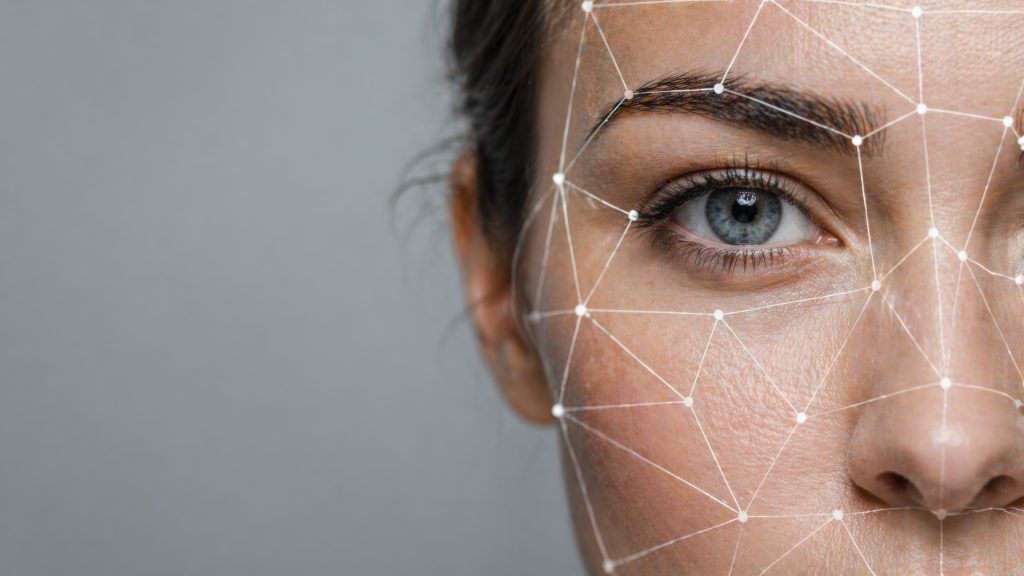
The Canadian Air Transport Security Authority (CATSA) has looked into enacting biometric scanning for Canadians on local flights by 2031, though it has indicated that any such decision is up to the elected government.
“The Authority in collaboration with Transport Canada and key partners is exploring the feasibility of biometric technology at the security screening checkpoint,” said Anna Maddison, spokesperson for CATSA, according to Blacklock’s Reporter. In its official corporate plan, tabled in the House of Commons on Sept. 16, CATSA said biometric scanners would be used for pre-board screening to “improve efficiency.”
The federal cabinet currently has no formal plans for a mandatory national digital identification system, or for a centralized database of Canadians’ personal or biometric information. But nothing stops cabinet from changing its mind, especially with CATSA now laying the foundation and preparing the way.
Would facial recognition and fingerprint scanning actually improve efficiency? Are flight departures delayed because airline employees are taking three to five seconds to look at the passport or driver’s licence of each passenger before they board the airplane?
Before boarding an airplane, and after confirming our identity by showing our passport or driver’s licence to the airline’s employee, we typically spend several minutes in the passenger “tube” that connects the building to the airplane. People shuffle along slowly through this tunnel, forced to accept the congestion caused by passengers who stop the line from moving when they stop to put their own luggage in the overhead bins before they sit down in their seats. If airlines were serious about speeding up the boarding process, then passengers at the very back would board first, and not delay anyone while they put their luggage in the overhead bins way in the back, where they are sitting.
If a biometric scan takes two seconds to verify a passport or driver’s licence (rather than the five seconds it takes an airline employee to do it), this time-saving of three seconds will do nothing to improve efficiency. We’ll all still shuffle along slowly inside the connecting tunnel, waiting for other passengers to put their belongings in the overhead bins next to their seats.
So what exactly is the problem that biometric scanning is supposed to solve? And how, specifically, will scanning our eyes, faces, and fingers “improve efficiency”?
Even if biometric scanning would improve efficiency, would it be worth giving up our privacy and exposing ourselves to the risk of compromising our personal and confidential information?
When I show my driver’s licence to the flight attendant in order to board a domestic flight, she or he doesn’t keep my personal information on file. In contrast, when government authorities use facial scans and fingerprints, it remains unclear who will possess this personal information, where it is stored, how long it is retained, who can access it, whether it can be shared with others, and whether it can eventually be used for purposes beyond the original reason of verifying one’s identity when boarding an airplane. If this private information is acquired by hackers, criminals, or others unauthorized people, it cannot be replaced. Your face, eyes, and fingerprints cannot be replaced in the way that a passport or a driver’s licence can.
Section 8 of the Charter protects Canadians against unreasonable search and seizure. Canada’s Supreme Court has recognized informational privacy as an important component of that protection. Informational privacy includes the ability to control when, how, and to what extent information about us is communicated to others. Biometric information is intensely personal. A government requirement that Canadians surrender fingerprints or facial information as a condition of travelling within Canada would not be justified as reasonable and necessary.
Before proceeding with the collection of intensely personal biometric data from Canadians, Ottawa should first explain why it wants or needs to collect this information. If it ain’t broke, don’t fix it. A passport or driver’s licence already allows the government and airlines to establish that I am the person who bought the ticket. If that purpose can be accomplished without collecting biometric information, there is no compelling reason to make Canadians surrender their fingerprints or facial information as a condition of travelling within Canada.
If the federal government still proceeds, then Canadians should know exactly what information is being collected, who is collecting it, who will possess it, where it will be stored, how long it will be retained, who will have access to it, whether it can be shared with other government agencies or private companies, and whether it can be used for purposes other than verifying the identity of air travellers.
Moreover, how can Canadians trust that their biometric information will simply disappear when a private company or government agency says it has been deleted? Canadians cannot independently verify what happens to their information once it has been surrendered. And no security system can guarantee that sensitive information will be secure. We have repeatedly seen supposedly secure databases breached, including those of large corporations and government agencies. Once biometric information is stolen, it cannot simply be replaced. The only safe biometric database is one that doesn’t exist.
Biometric technology opens the door further to mass surveillance. Governments and private corporations can use advanced facial recognition and cameras for covert tracking and identifying people in public spaces, eliminating all privacy for citizens.
The promise of “voluntary” biometric scanning is worthless. When politicians and public health officials first introduced the COVID vaccine to the public, they declared that making the vaccine mandatory would be a human rights violation. “It will always be voluntary,” they promised. And, indeed, the jab was voluntary … until these same people changed their minds and started to impose harsh consequences on Canadians who chose not to get injected.
Once the system for “voluntary” biometric scanning is in place, there is nothing inherent in the technology that prevents its use from being expanded. Governments change, policies change, and laws change. “Is this voluntary today?” is not the right question. Rather, Canadians should ask: “What infrastructure is government creating, who will control it, and what prevents a future government from expanding its use?”
Biometric technology threatens our individual liberty, our privacy rights, and our control over one’s personal information. Canadians should not have to choose between surrendering highly sensitive biometric information and giving up the ability to travel by air within their own country.
John Carpay, BA, LLB, is President of the Justice Centre for Constitutional Freedoms.
Read this column in the Epoch Times