
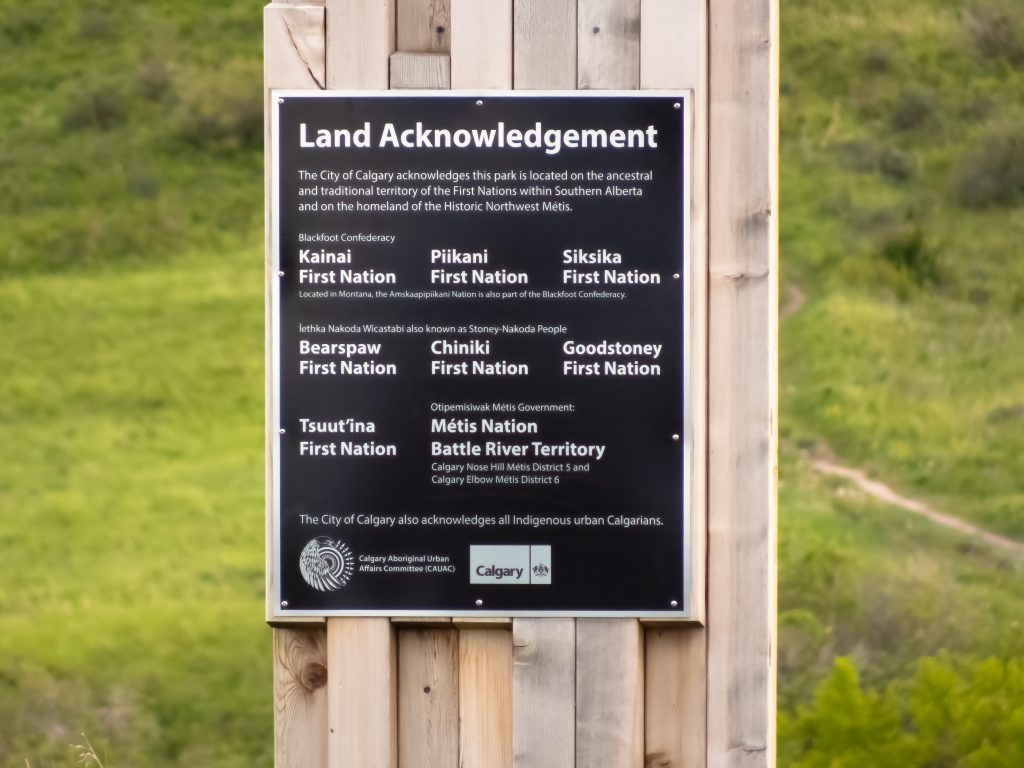
A new poll conducted for Postmedia by Leger has found that even indigenous people are growing increasingly sick and tired of performative and pointless land acknowledgements. That’s because these cult-like, ceremonial chants held before everything from hockey games to library board meetings only serve the interests of the usual white, middle-class woke folks who want to feel good about themselves for doing something without actually doing anything. The chanting hasn’t improved conditions on any indigenous reserves nor helped people understand indigenous issues. It simply annoys and divides people.
The polling found 41% of indigenous respondents felt acknowledgements have become overused to the point that they have “lost their meaning.” Even without overuse, the meaning and purpose of the acknowledgements are questionable. There is little doubt we are being subjected to too many of them, though. Even radio stations break into apologetic spiels now and then, where they thank and acknowledge that they are enjoying the privilege of broadcasting on land where some ancestor or another of an indigenous person once walked. So what?
The chants are becoming more aggressive and making more dangerous claims all the time. Often, the words “unceded” or even “stolen” appear within the verbiage when talking about the land we walk upon. And own. Those recitations can carry weight in future land claim disputes. If enough people have chanted that they are on stolen land long enough, is it really shocking that those who allegedly have had the land stolen will demand it back? How’s that all working out for the people in Richmond, BC these days?
Identity politics are dividing the nation, and acknowledgements widen the social rifts. Being told, at every gathering, that you’re a guest or occupant in your own country breeds backlash. That can harden attitudes toward indigenous issues rather than soften them. Not everybody who listens to these rituals feels more inclined to hand over land to indigenous claimants. They are simply getting pissed off and are tired of being told they are responsible for things that may or may not have happened hundreds of years ago. That hostility can end up being taken out on indigenous people, and let’s remember, it’s not usually indigenous people demanding the acknowledgements. It’s the usual purple-haired white suspects.
All of Alberta is under a treaty. What that means is that indigenous leaders signed a contract that permanently ceded 98.6% of the land over a century ago. There are still endless claims being made. Lawyers make quite a healthy living from them. But the claims are baseless. Or at least they should be. If enough Albertans are compelled to chant and say they are guests upon it rather than citizens, eventually, some judge is going to agree and redraft the lines of the treaties.
Acknowledgements are a form of compelled speech. Social pressure and even financial pressure are applied to ensure people stand and take part in the performative prayers. Rest assured, many people are in positions where they could lose their jobs if they try to take a principled stand against the chants.
Hopefully, as it becomes evident that even indigenous people are sick of the land acknowledgements, government officials will feel emboldened enough to start ending them. In Alberta, the United Conservative Party’s (UCP) new legislation enforcing neutrality upon educational institutions could provide the pathway to ending the practice in post-secondary facilities. The acknowledgements are inherently political, and the colleges and universities are the front lines of where these divisive exercises have begun.
The UCP also has a policy proposal being put to its members at their annual general meeting at the end of November to end acknowledgements in all government-regulated and funded bodies. It should be a lively debate, and with more than 7,000 people expected to be in attendance, the endorsement of the policy could be quite strong. Ending these ridiculous acknowledgements must start at the top. If the Alberta government ends the practice, their use will fade away in the private sector as well.
I say good riddance to land acknowledgements. And it appears that a growing part of the indigenous community feels the same way.
John Carpay, BA, LLB, is President of the Justice Centre for Constitutional Freedoms.
Read this column in the Western Standard
