
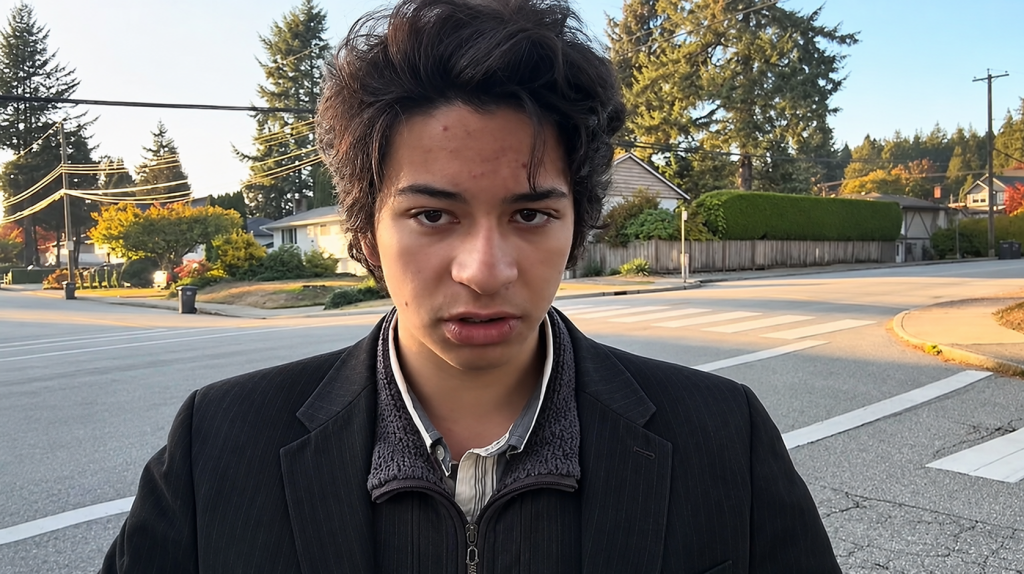
COQUITLAM, BC: The Justice Centre for Constitutional Freedoms announces that it is funding legal representation for Isaac Simpson, a 16-year-old student suspended after criticizing school lessons and Truth and Reconciliation programming in online videos. Constitutional lawyer Elsa Michel represents the Grade 11 student, who attends a public high school in Coquitlam.
Mr. Simpson criticized a speaker’s “land back” discussion and an illustration of Catholic nuns and an RCMP officer forcibly taking indigenous children from their mothers. He saw the programming as indoctrination that discouraged questions and debate.
His challenge raises questions about students’ freedom of expression under section 2(b) of the Canadian Charter of Rights and Freedoms and the limits public schools may place on students who question what they are taught.
Mr. Simpson published a YouTube video entitled “LIES and Reconciliation” on September 30, 2026. It combined footage recorded at school with his own commentary challenging the messages presented to students.
In an October interview, Mr. Simpson explained his concern: “They [school staff] were just telling you what to think, not how to think.”
An October 8 letter from the principal confirmed that Mr. Simpson had been suspended from October 2 to October 6. The letter said he could return only if he removed the video or edited out all audio, footage and images of students, staff, visitors, and educational activities within the school.
The school alleged that Mr. Simpson recorded people without their knowledge or consent, broke rules governing personal devices, and published commentary that mocked others and amounted to harassment. However, recording a conversation without every participant’s consent is not inherently unlawful in Canada. The school must also apply its rules consistently with students’ Charter rights.
Mr. Simpson refused to remove the video.
He later published a second video, “I Got SUSPENDED For Exposing School Propaganda!,” commenting on his suspension.
After learning of the second video on October 16, the principal increased Mr. Simpson’s suspension to Level III and referred it to the district’s Student Suspension Review Committee. He remained barred from school grounds without permission, with schoolwork available to him.
The principal wrote that the district “does not agree with or support the opinions” in his videos, but maintained that her actions addressed school rules, privacy and harm to the school community.
On October 29, one day after meeting with Mr. Simpson and his parents, the School District Discipline Committee ruled that his refusal to remove the videos continued to breach district policies and negatively affected the school environment.
The committee permanently barred Mr. Simpson from his high school. It offered educational programming at another school in the same district, subject to conditions that included removing the videos.
Section 2(b) of the Charter protects freedom of thought, belief, opinion, and expression. That protection extends to expression people consider offensive or unpopular. In applying its policies, the school district must show that the limits it placed on Mr. Simpson’s freedom of expression were proportionate to the goals it sought to achieve.
“Schools have responsibilities to protect students’ privacy and maintain a safe learning environment. However, they must also respect students’ freedom of expression,” said Ms. Michel.
“This case raises serious questions about whether the school’s response went further than necessary and punished a student for challenging ideas promoted at school. In a free and democratic society, public school curriculum and its delivery are matters of public interest on which all citizens, especially students attending public schools and their parents, have a constitutional right to comment,” she added.
Ms. Michel is preparing an appeal of the District Discipline Committee’s October 29 decision on Mr. Simpson’s behalf.
The Justice Centre is Canada’s leading civil liberties organization defending Charter rights and freedoms in the courts of law and in the court of public opinion. Founded in 2010, the Justice Centre funds lawyers across Canada, relies entirely on voluntary donations to carry out its mission, and issues official tax receipts to donors.
