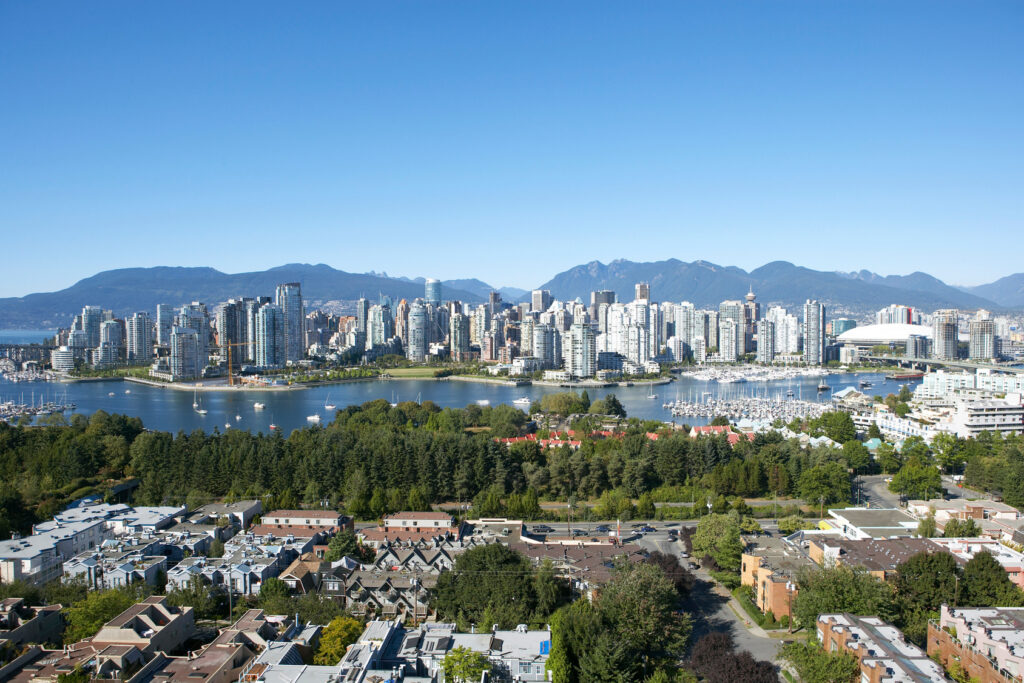
There are now questions around whether large swathes of Vancouver could be closer to belonging to an aboriginal band thanks to the “Rights Recognition Agreement” signed in secret between the Musqueam Indian Band and Canada’s federal government. This agreement recognizes issues related to aboriginal title within not only Vancouver, but also Burnaby, New Westminster, Richmond, North Vancouver, West Vancouver, and parts of Coquitlam, Delta, and Surrey, plus smaller towns and villages.
Some might say “relax!” and assert that millions of B.C. homeowners will never, ever have to worry about paying rent to their new 1,500 or so Musqueam landlords. The Musqueam Indian Band itself states that the agreement does not relate to land ownership, and “there are absolutely no impacts to fee simple lands / private property. We recognize how impactful the Cowichan judgement has been on everyone – including us. It’s why we are appealing the judgement.”
Chief Wayne Sparrow said in December 2025 that “Musqueam is not coming for anyone’s private property. Our approach to traditional unceded territory is one of partnership and relationship with our neighbours, not trying to take away our neighbours’ private property.”
This sounds reassuring, but is not what the actual agreement says. While the Musqueam can choose not to enforce legal property rights against current homeowners for a number of years (or even decades), such choice does not detract from the legal reality they could end up pursuing, enabled further by the agreement.
Promises not to enforce one’s legal rights over property are ultimately worthless. The property owner has the right to change his mind. A court will issue a ruling to apply the language of a legal agreement, even if one party once promised that it would not enforce the terms of the agreement. A landlord can choose not to collect rent for a season, but he or she retains the legal right to collect rent. Years from now, when the Musqueam eventually come to collect their rent, homeowners will not be able to rely on a Musqueam promise made in February 2026 to refrain from collecting rent.
According to lawyer Thomas Isaac, an expert in aboriginal law, aboriginal title as defined by the Supreme Court of Canada in numerous rulings is a right to the land itself, not merely an interest in land.
Clause M of the agreement’s preamble states: “Aboriginal title is an inherent right and a legal interest in land and includes a jurisdictional and inescapable economic component and the right to participate in decisions about the use and development of territory. Musqueam’s Aboriginal title has not been extinguished. It is Musqueam’s inherent rights and title which serve as the foundation for arrangements that seek to support a sustainable, modern, Musqueam economy that reflects the economic component of Musqueam rights.”
Clause H of the preamble states that the Musqueam protect their territory through the exercise of their laws, “to steward, control and limit the use of our lands, seas, waters and resources in our territory.” This describes accurately what property owners normally do with their property. Clause H goes on to assert that “Musqueam people intend to restore to our own use sufficient traditional resources to enable us and our descendants to live as distinct and independent people in our own land.”
Clause L of the agreement’s preamble expressly asserts the Musqueam’s “rights to land” and to “our laws and legal orders” as recognized and affirmed by Section 35 of the Constitution Act, 1982 and by the United Nations Declaration on the Rights of Indigenous Peoples.
In further reference to land ownership, Clause J of the preamble asserts that the Musqueam “have consistently protected and governed access to our territory and resources throughout our history,” and declares that Musqueam “legal traditions” addressed “permissible access” … and “uninvited or unwelcomed people (known as trespassers in the modern-context).” I would venture a guess that none of the approximately 2,600,000 British Columbians who live in Greater Vancouver have sought or received Musqueam permission to buy a home, rent an apartment, set up a business, walk on a beach, or enjoy a picnic in a park. It is doubtful that the British (along with Canadians of other ethnicities) have, over the course of the past two centuries, asked the Musqueam for permission to build houses, roads, bridges, courts, churches, jails, lumber yards, canning factories, fishing docks, and a busy international airport.
Contrary to what is asserted in the agreement, the Musqueam have not, in fact, consistently “governed access” to territories and resources “throughout history.” Asians and Europeans and Africans moved into these territories and built the modern Canadian economy, which has replaced the previous hunting-and-gathering economy of centuries past. Whether historically accurate or not, Clause J aligns with other clauses in this agreement that assert Musqueam land ownership of Vancouver and a dozen other cities and towns. Whatever the signatories may or may not have intended, the agreement’s language clearly asserts aboriginal title over lands where half or more of B.C.’s people reside.
Even if this agreement doesn’t confirm Musqueam land ownership of Greater Vancouver, its race-based approach to government and governance is a recipe for division, conflict, and distrust. Even if the private property rights of millions of homeowners are legally guaranteed, the agreement establishes Musqueam “laws and legal orders” as existing alongside “and independently of Canada’s legal system.” This “legal pluralism” must be “reflected” as we “work towards building external partnerships.”
Canada’s Constitution Act of 1867 (formerly known as the British North America Act) allocates all political power to two levels of government: federal and provincial. (Municipal government falls under provincial authority, and has no constitutional status of its own.) Section 91(24) of the Constitution Act gives Parliament and the federal government exclusive authority over “Indians, and Lands reserved for the Indians.” Our Constitution doesn’t recognize a third level of aboriginal government that could coexist alongside the federal and provincial levels.
Further, even if the Constitution allowed for a third level of aboriginal government, would it be wise to create an additional layer of government that is based on race or ancestry? Is it wise to confer political power on 1,500 Musqueam band members, entitled by their ancestry to privileges and benefits not enjoyed by the other 2,600,000 Canadians living in the same area?
Secret agreements and race-based rights are not the way to reconciliation between Canadians of different ethnicities. When legal rights and benefits are based on a person’s skin colour or ancestry, the predictable outcomes are conflict, resentment, and strife. When the law itself pushes citizens to fixate on each person’s race and descent, the law destroys the basis for unity that can arise only when we focus on our common humanity, and not on personal characteristics beyond one’s control, like skin colour and ancestry.
South Africa’s race-based apartheid laws (1948–1991) were a disaster, doomed to failure from the outset, and rightfully opposed by Canada and other countries. We Canadians would be foolish to ignore and reject the painful lessons of history—lessons that can be learned by those who have enough humility to learn them.
This agreement gives 1,500 Musqueam Band members legal ownership of Greater Vancouver, and creates a race-based third level of aboriginal government to join the federal and provincial governments in exercising authority.
Whether the agreement does or does not comply with Canada’s Constitution is a secondary question. The first question to consider is whether it is wise or foolish for Canada to base policies, agreements, and the exercise of governmental authority on race, ethnicity, ancestry, and descent.
John Carpay, B.A., LL.B., is president of the Justice Centre for Constitutional Freedoms (jccf.ca).