Chief Justice Richard Wagner should recuse himself entirely from any discussions about whether the Supreme Court of Canada should hear the federal government’s appeal of its back-to-back Federal Court losses.
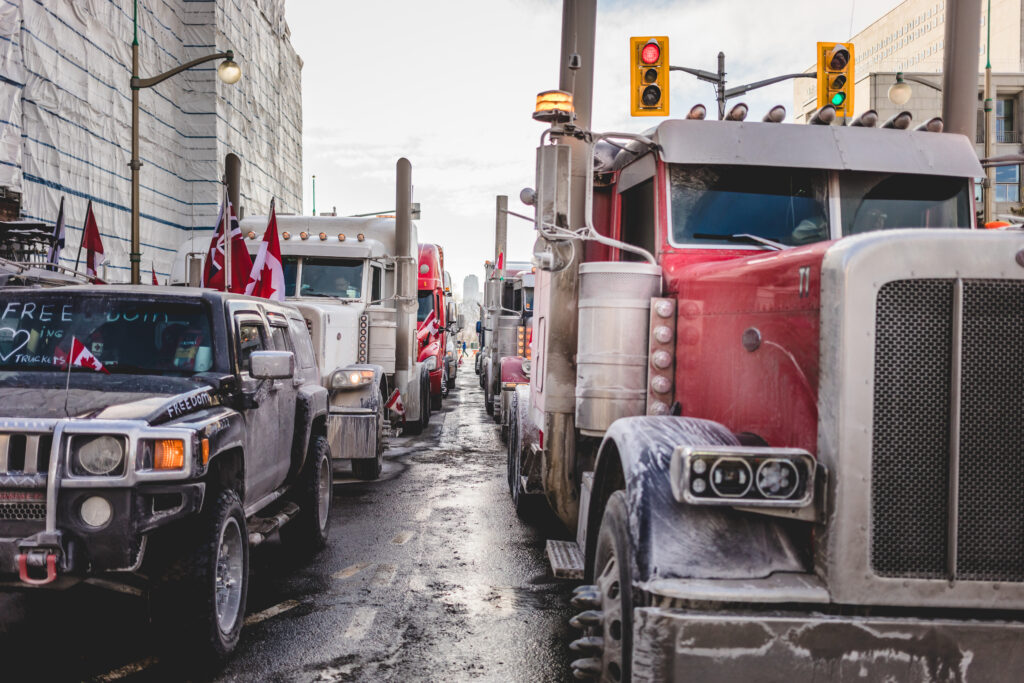
In January 2026, the Federal Court of Appeal upheld a 2024 lower court ruling that the Trudeau cabinet acted illegally in 2022 when using violence against peaceful Freedom Convoy protesters in Ottawa. There was no “national emergency” as required by the Emergencies Act, and the federal government was not justified when violating Charter rights and freedoms by freezing the bank accounts of hundreds of Canadians. After losing twice, the federal government still forges ahead and is now appealing to the Supreme Court of Canada.
The Supreme Court of Canada hears less than ten percent of the appeals that are brought to it. The application for Leave to Appeal is reviewed by a three-judge panel, which then presents the entire court (all nine judges) with a recommendation as to whether to hear the appeal or not.
The federal government faces an uphill fight, needing to persuade the Court that there is an important legal issue or legal doctrine that requires clarity from the Court. The Federal Court of Appeal (2026) and lower court (2024) rulings are straightforward in their denunciation of the 2022 cabinet decision to invoke the Emergencies Act.
Chief Justice Wagner should have no involvement in this case at all, because he has publicly proclaimed his bias against the Freedom Convoy by accusing it of “hostage-taking” and promoting “anarchy,” based on a “certain ignorance” and a “bad understanding” of Canadian law. According to Wagner, the Freedom Convoy’s “attacks” on the justice system and democratic institutions should be strongly condemned. Wagner has also suggested that the Freedom Convoy was motivated by and was guilty of spreading “disinformation.”
Speaking of disinformation, in its Memorandum of Argument filed with the Supreme Court, the federal government argues that the Freedom Convoy “had occupied downtown Ottawa for weeks, with no end in sight” (emphasis added).
In fact, prior to the Emergencies Act invocation, the protesters had reached and signed an agreement with the City of Ottawa to move their trucks out of Ottawa’s four-block by five-block downtown area. Serge Arpin, Chief of Staff to the Ottawa Mayor, testified under oath at the Public Order Emergency Commission that 102 trucks had moved out of downtown Ottawa by noon on February 14, 2022. Most of these trucks left the city entirely, while some moved to the Parliament buildings (Wellington Street) as per the signed agreement. Ottawa’s General Manager of Emergency and Protective Services, Kim Ayotte, confirmed under oath that the movement of vehicles onto Wellington Street “got stopped by police.” It was the police who blocked the movement of trucks out of the downtown core from February 14 onwards. The federal government’s assertion that there was “no end in sight” is plainly false.
Including false information in a court brief speaks volumes about the federal government’s lack of integrity and the weakness of its appeal. Those who strive to operate in the realm of truth and justice do not need to twist facts.
In its Memorandum of Argument, the federal government goes on at great length about the border blockades in Coutts, Alberta, and in Windsor, Ontario. But these border blockades had ceased prior to the Trudeau cabinet invoking the Emergencies Act on February 14, 2022. Further, these border protests were not related to the Freedom Convoy in Ottawa. What the government wrote about border blockades in its Memorandum may well be true, but this information is highly misleading: the government uses it to argue that invoking the Emergencies Act was necessary because of a continuing, ongoing, Canada-wide problem.
The government’s Memorandum of Argument asserts that “swastikas” (plural!) were “held or worn by some protesters,” without providing any evidence to support this drive-by smear. The identity of the sole individual who displayed a Nazi flag in Ottawa on one occasion is not known; this person (whose face was covered) may have been someone seeking to discredit the Freedom Convoy. There is no evidence to support the assertion that a Freedom Convoy supporter or participant was holding this flag. Here again, the federal government depends heavily on government-funded media, which faithfully propagated the narrative announced by Justin Trudeau before the peaceful protesters had even arrived in Ottawa: the truckers were an anti-science “fringe minority” with “unacceptable views.”
Hopefully, the federal government’s appeal will be one of the 90% of cases that the Supreme Court declines to hear. If the Court agrees to hear the appeal, that is no indication that it will rule in favour of the government. To safeguard the reputation and integrity of the Court that he leads, Richard Wagner should not be involved at any stage of this process.
John Carpay, B.A., LL.B., is president of the Justice Centre for Constitutional Freedoms (jccf.ca).