For a province that could summarize its cultural zeitgeist in a single word – freedom – Alberta is home to some of the worst government transgressions against democracy during the COVID-19 crisis.
First, Bill 10, which gave individual cabinet ministers new power to write laws on the fly, was rushed through the legislature in April; the whole process took little more than 48 hours. The hurried bill proposed creating new offences and penalties without any input from elected members of the Legislative Assembly of Alberta.
Initially, the government denied having acquired any new powers at all, claiming that Bill 10 merely “clarified” existing emergency powers under the Public Health Act. The government soon put the lie to that claim, however: In May, Health Minister Tyler Shandro unilaterally added new sections to the act, granting the chief medical officer access to the personal and confidential health information of Albertans and allowing this private information to be shared with the police, completely bypassing the data safeguards of Alberta’s Health Information Act.
Mr. Shandro’s abrupt edict contained no precautions to clarify how long this information would remain in police possession, and no explicit limits for how it might be used. It does not provide for the safekeeping of this trove of private data, nor does it require its destruction at a later date. This amounts to a power grab, and to a warrantless search without judicial checks and balances – and it came into force without the oversight, scrutiny or approval of the Legislature, exactly as delineated by Bill 10.
The UCP government wielded its unbridled executive power again on June 26, when Bill 24 came into force, only eight days after its introduction. Amending 15 different laws simultaneously, the bill extends the government’s emergency powers, in qualified situations, through to Dec. 31, 2021 – well beyond the exceptional circumstances of a temporary public health emergency.
The Alberta government can now exercise a regular (non-emergency) power to enter long-term care homes, an isolation area for homeless persons in Calgary, and all airports (including private boarding areas) without a warrant, and take possession of these facilities and personal property within them. In these locations, the government now has the permanent power to conscript people or require them to render aid, and to authorize the distribution of health services even when Alberta is no longer in a state of public health emergency. While perhaps well-intended, this extension of emergency powers for use at any time without notice during non-emergencies has a decidedly draconian appearance.
Thanks to Bill 24, the Health Minister now has permanent power to make regulations based on orders issued by the Chief Medical Officer under the Public Health Act, which are unilateral laws made by one doctor without any input from the Legislature. As the Health Minister explains it: “The bill also proposes creating a new regulation-making authority to support and empower orders of the Chief Medical Officer of Health as required. This would give her the authority to act if and as required without an official state of public health emergency being declared.”
Similarly, Bill 24 extends the release of private and confidential medical information to the police to Dec. 31, 2021 from Aug. 14, when this privacy breach would have lapsed – extending the already unconstitutional release of patient records for an additional 16 months.
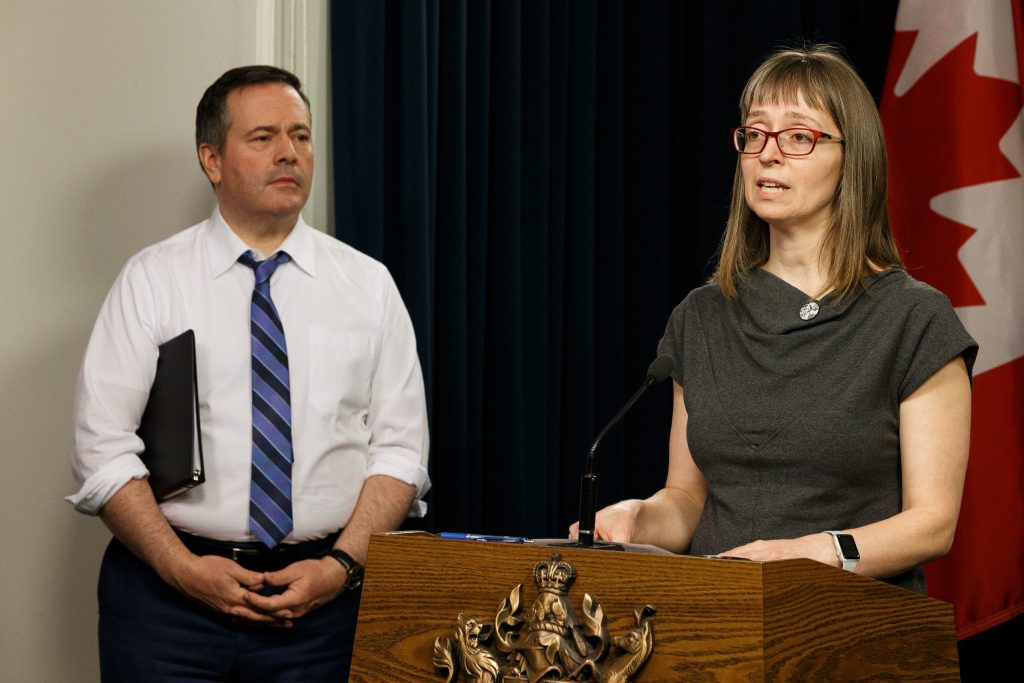
In Alberta, the public health emergency is no longer in effect. Premier Jason Kenney declared as much when he announced on May 28 that the provincial state of emergency would not be renewed when it ended on June 15. On June 22, during debate on Bill 24, Mr. Shandro himself informed the legislature that the initial COVID-19 risk was “hard to scope,” and that he thought the worst-case scenario was “severe,” but that “the risk as we know it today, based on our actual experience, is very different.”
So why extend emergency powers by executive fiat?
The answer appears to be summed up in the suddenly popular truism to “never let a crisis go to waste.” The lockdowns have unfortunately exposed governments’ dangerous penchants for unchecked power – exploiting COVID-19 to the detriment of democracy, the rule of law and citizens themselves.
By John Carpay, The Globe and Mail, July 7, 2020