

Delta Hospice Society granted intervenor status in key case over assisted suicide-free health care
The Justice Centre announces that Delta Hospice Society can now present critical arguments and evidence to the court in a case putting pressure on faith-based healthcare facilities in British Columbia to offer assisted suicide to palliative care patients.
Chief Justice Ronald A. Skolrood granted Delta Hospice Society intervenor status in the case on April 1, 2025. The Society is a registered charity and vocal advocate for assisted suicide-free palliative care facilities.
B.C. court to hear arguments on whether faith-based facilities must offer euthanasia
Should faith-based health care providers be forced to offer assisted suicide to palliative care patients in British Columbia? The Supreme Court of British Columbia must answer this question in a lawsuit about whether Canadians have a right to die in assisted suicide-free spaces.
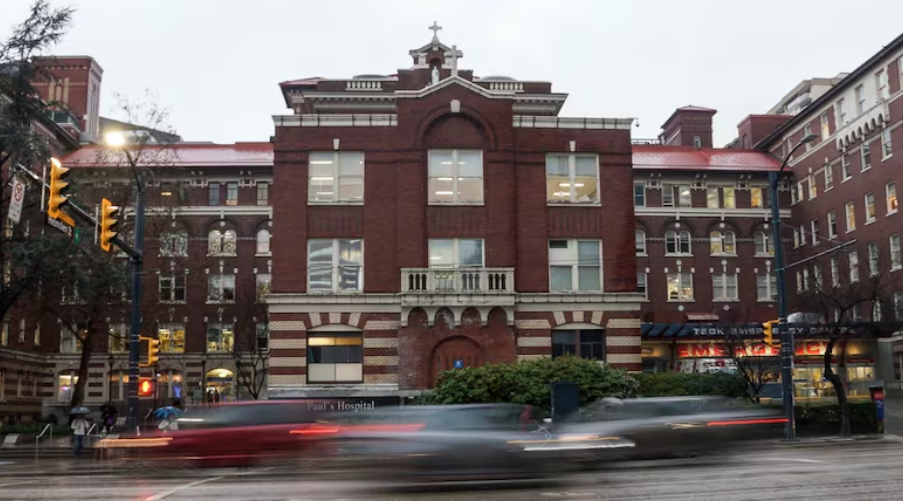
In early 2022, 34-year-old Samantha O’Neill was admitted to Vancouver’s St. Paul’s Hospital, where she was diagnosed with advanced cervical cancer. In 2023, she decided that she wanted to be euthanized but learned that St. Paul’s Hospital did not perform assisted suicide procedures. The hospital is operated by Providence Health Care Society, “a Catholic health care community dedicated to meeting the physical, emotional, social, and spiritual needs of those served through compassionate care, teaching, and research.” The Catholic Church has long opposed all forms of euthanasia.
Ms. O’Neill died on April 4, 2023, as she was preparing to be transferred to a new health care facility that administered assisted suicide. Her mother, Gaye O’Neill, is now suing Providence Health Care Society and the Province of British Columbia, arguing that her daughter suffered needless pain and that her Charter rights to freedom of conscience and religion and to life, liberty, and security of the person had been violated.
Assisted suicide-free palliative care at heart of B.C. court battle
Since 2023, Delta Hospice Society Executive Director Angelina Ireland has educated groups across Canada and the United States on the importance of protecting and preserving authentic palliative care and about the risks of presenting assisted suicide materials in palliative care spaces. As intervenors, the Society will encourage the court to consider that many terminally ill patients do not want to be asked about their interest in euthanasia and desire an assisted suicide-free space in their final chapter.
Indeed, they will argue that the Charter section 7 right to life, liberty, and security of the person demands that patients have access to palliative care spaces affirming the value and dignity of life.
Ms. Ireland stated, “We look forward to confirming Section 7 of the Canadian Charter of Rights and Freedoms for Canadians who seek life-affirming spaces during their illnesses, so they are not deprived of life, liberty and the security of the person.”
Constitutional lawyer Allison Pejovic stated, “There are many terminally ill palliative care patients in British Columbia who desire to spend their final days without being asked if they want their life ended by their health care provider. It is important that these patients are able to access an assisted suicide free space which upholds their human dignity, liberty, and bodily autonomy.”
The next update on this case is likely to be October of 2025.
Delta Hospice Society granted intervenor status
The Supreme Court of British Columbia will hear a constitutional challenge beginning Monday, January 12, 2026, that will decide whether faith-based health care facilities in British Columbia can be compelled to provide assisted suicide to palliative care patients.
The Delta Hospice Society has been granted intervenor status in the case, allowing it to present evidence and legal arguments in defence of assisted suicide-free palliative care spaces. Lawyers funded by the Justice Centre will support the Society’s participation as it argues that many terminally ill patients wish to spend their final days in care environments that affirm life and do not introduce euthanasia.
The lawsuit arises from the death of a woman who sought assisted suicide while receiving care at St. Paul’s Hospital, a Catholic institution that does not provide assisted suicide, and whose family alleges violations of Charter rights.
Constitutional lawyer Allison Pejovic said, “There are many terminally ill palliative care patients in British Columbia who desire to spend their final days without being asked if they want their life ended by their health care provider.”
Written submissions from intervenors are expected in March 2026, with possible oral arguments in April 2026. The outcome of the case is expected to have significant implications for religious freedom, patient choice, and the future of palliative care in British Columbia and across Canada.
Trial begins on Monday, January 12, 2026
On Jan. 12, 2026, the Supreme Court of British Columbia will begin hearing a constitutional challenge that will determine whether faith-based health care facilities in British Columbia can be forced to offer assisted suicide to palliative care patients. Trial proceedings are scheduled to run from January 12 to February 6, 2026, in Vancouver.
As an intervenor, the Delta Hospice Society will argue that many terminally ill patients wish to spend their final days in palliative care settings that affirm life and do not introduce euthanasia. The Society will submit that section 7 of the Charter requires the availability of assisted suicide-free palliative care spaces for patients who seek them.
Constitutional lawyer Allison Pejovic said, “There are many terminally ill palliative care patients in British Columbia who desire to spend their final days without being asked if they want their life ended by their health care provider. It is important that these patients are able to access an assisted suicide-free space which upholds their human dignity, liberty, and bodily autonomy.”
Delta Hospice Society Executive Director Angelina Ireland said, “We look forward to confirming section 7 of the Canadian Charter of Rights and Freedoms for Canadians who seek life-affirming spaces during their illnesses, so they are not deprived of life, liberty, and the security of the person.”
Intervenors are expected to file written submissions in March 2026, with the possibility of oral submissions in April 2026, at the court’s discretion. The case has broad implications for religious freedom, patient choice, and the future of palliative care in British Columbia and across Canada.