
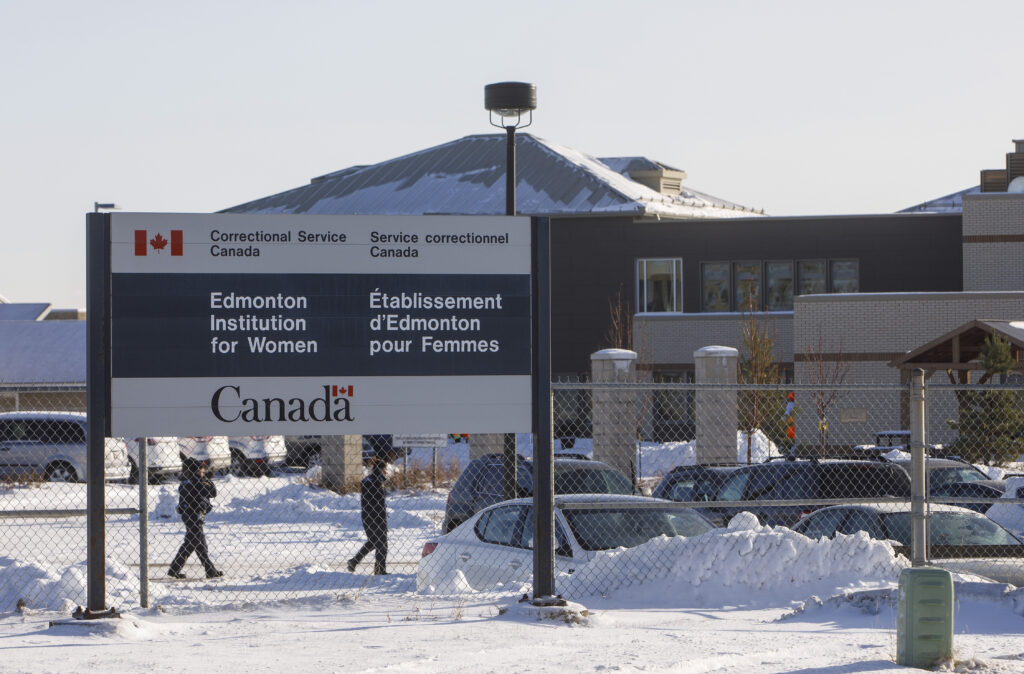
Women’s prison policy challenged over safety and Charter rights
Since 2017, Correctional Service Canada has permitted trans-identifying male inmates to be transferred into women’s federal prisons based on gender identity rather than biological sex. Lawyers funded by the Justice Centre are challenging that policy on behalf of Canadian Women’s Sex-Based Rights (CAWSBAR), arguing that it violates the Charter rights of federally incarcerated women.
Policy changed after Parliament amended federal law
Prior to 2017, only male inmates who had undergone sex reassignment surgery could be transferred to women’s prisons.
That changed after Parliament passed Bill C-16, which added gender identity and gender expression as prohibited grounds of discrimination under the Canadian Human Rights Act and the Corrections and Conditional Release Act. In response, Correctional Service Canada adopted new policies permitting biological males who identify as women to be transferred into women’s institutions without requiring surgical transition.
The current policy, Commissioner’s Directive 100: Gender Diverse Offenders, came into effect in May 2022.
CAWSBAR argued the policy exposed female inmates to harm
On April 7, 2025, lawyers funded by the Justice Centre filed a constitutional challenge in the Federal Court on behalf of Canadian Women’s Sex-Based Rights (CAWSBAR), a national, non-partisan organization that advocates for the protection of women’s sex-based rights.
The lawsuit challenged Commissioner’s Directive 100 and asked the Court to declare it to be of no force or effect.
CAWSBAR argued that forcing female inmates to share correctional facilities with trans-identifying male inmates exposed women to physical and psychological harm, including sexual assault, sexual harassment, intimidation, stalking, beatings, and grooming.
The lawsuit also argued that many federally incarcerated women have experienced physical or sexual abuse by men before entering prison. It claimed that housing biological males alongside female inmates, including during group therapy sessions, undermined rehabilitation and caused psychological distress, anxiety, depression, post-traumatic stress, and fear.
The claim further alleged that many women were reluctant to complain because they feared institutional repercussions or negative effects on future parole decisions.
Constitutional challenge alleged violations of female inmates’ Charter rights
The lawsuit argued that Correctional Service Canada’s policy violated sections 7, 12, and 15 of the Canadian Charter of Rights and Freedoms by infringing female inmates’ rights to life, liberty and security of the person, freedom from cruel and unusual treatment, and equality under the law.
The claim also relied on section 28 of the Charter, which guarantees that the rights and freedoms set out in the Charter are guaranteed equally to male and female persons.
CAWSBAR supported its claim with evidence from former inmate and board member Heather Mason, who described the practical effects of the policy and explained why many incarcerated women could not safely bring constitutional challenges themselves.
The lawsuit also referred to research indicating that a significant proportion of trans-identifying male inmates housed in women’s institutions had been convicted of violent offences, including homicide and sexual offences.
Constitutional lawyer Chris Fleury said, “No woman should be at risk of abuse or violence at the hands of a man while they are serving a sentence in a federal institution.”
Federal Court allowed the constitutional challenge to proceed
The federal government asked the Court to strike the claim, arguing that it disclosed no reasonable cause of action. It also opposed CAWSBAR’s request for public interest standing.
On May 14, 2026, the Federal Court rejected both arguments.
The Court ruled that the constitutional challenge raised arguable claims under sections 7, 12, and 15 of the Charter, as well as the Canadian Bill of Rights, and concluded that it was not “plain and obvious” the claim could not succeed.
The Court also granted CAWSBAR public interest standing, accepting that federally incarcerated women might be unable or unwilling to challenge the policy themselves because of fears of reprisals or consequences affecting their incarceration or parole. The Court further recognized that the case raises issues of public importance affecting a particularly vulnerable group.
Constitutional lawyer Chris Fleury said, “These decisions ensure that serious constitutional concerns about the treatment and safety of federally incarcerated women will receive a full hearing before the Court.”
“The Court recognized that incarcerated women are not realistically in a position to bring these claims on their own,” he added.
The Court has not yet scheduled the next hearing date in the case.Federal government files Defence in challenge to prison gender policy
On August 31, 2026, the federal government filed its Statement of Defence in the constitutional challenge to Correctional Service Canada’s policy allowing trans-identifying male inmates to be transferred to women’s prisons.
In its Defence, the federal government confirmed that complaints by female inmates against trans-identifying male inmates have resulted in sexual-assault charges.
An inmate identified as S/M was charged with one count of sexual assault and one count of criminal harassment in May 2020 after a female inmate filed a complaint. Another inmate, identified as KF/R, was charged with two counts of sexual assault after a female inmate filed a complaint in October 2024.
The Defence also acknowledges other reports and allegations of sexual assault involving trans-identifying male inmates in women’s institutions. These include a 2018 complaint that prompted a police investigation but no charges, a 2021 allegation of sexual and physical assault at Fraser Valley Institution, and a 2019 disclosure of sexual assault at Okimaw Ohci Healing Lodge.
Despite acknowledging these complaints, allegations, and charges, the federal government “wholly denies that any alleged harm to inmates housed in women’s institutions flowed from the implementation of CD 100.”
Constitutional lawyer Chris Fleury said, “The government’s own Defence shows that female inmates have made serious complaints about what has happened to them in women’s prisons, including complaints that resulted in sexual-assault charges.”
“Female inmates are being exposed to real risks and real harm. This case is about protecting their safety, dignity, and constitutional rights,” he added.