
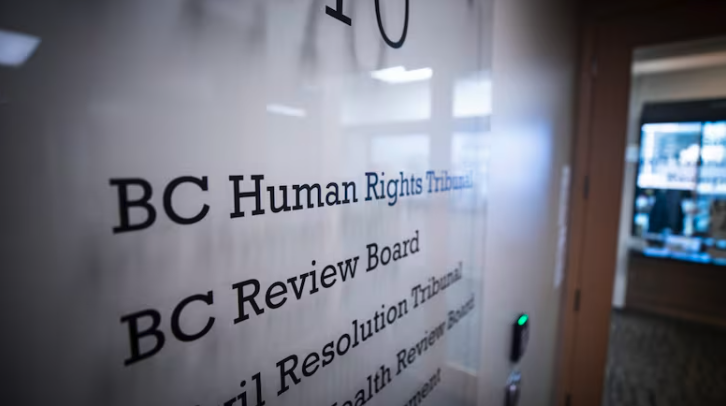
Not satisfied with ordering Barry Neufeld to pay $750,000 to LGBT teachers, the BC Human Rights Tribunal has now ordered Dr. Henry Ajaero to pay $28,100 for refusing to inject a 14-year-old boy with puberty blockers.
Welcome to “human rights” in British Columbia, where disagreement with transgenderism can carry a ruinous price tag.
Barry Neufeld opposed the promotion of transgender ideology to children and was elected to the Chilliwack school board while making his views known. For his public statements, the tribunal found him liable under BC’s Human Rights Code and ordered him to pay $750,000 to the BC Teachers’ Federation and the Chilliwack Teachers’ Association on behalf of their LGBT members.
Dr. Ajaero practises family medicine in Delta, B.C. He has about 2,800 patients and sees roughly 50 patients each day. An immigrant from Nigeria, he is a devout, churchgoing Christian. He testified that gender-transition treatment conflicts with his religious beliefs.
The patient, identified by the tribunal as “Child Q,” was a 14-year-old boy who identified as a girl and wanted to stop male puberty. The B.C. Gender Clinic prescribed Lupron, a puberty blocker injected into children every three to four weeks.
Dr. Ajaero had referred Q to the clinic, but when asked to give the injection himself, he declined. He said that participating in gender-transition treatment violated his religious beliefs and that administering Lupron in this context was outside his experience and expertise.
What happened next? Child Q obtained the injection from another doctor at a walk-in clinic later that same day.
No treatment was prevented. No dose was missed. Yet the tribunal ordered Dr. Ajaero to pay $20,000 for injury to Child Q’s dignity, feelings, and self-respect, plus $8,100 for the cost of “expert” evidence used against him.
The contradictions in the ruling are striking, alarming, and an abuse of both the spirit and letter of human rights legislation in British Columbia.
The tribunal decision acknowledges that “differences in opinion can arise when doctors, exercising their best medical judgment, decide upon the best course of treatment.” It quotes precedent stating that the standard of medical care arising from a doctor’s best medical judgment “is not an issue for the Tribunal to decide.” It even agrees with Dr. Ajaero “that it is not this Tribunal’s role to direct the practice of medicine.”
Excellent.
Except, apparently, when a doctor refuses to inject a teenager with puberty blockers.
Then his judgment becomes the tribunal’s business after all. The decision issued by tribunal member Devyn Cousineau concludes, “I find that Dr. Ajaero’s medical judgment was in fact exercised in a discriminatory manner.”
So, the tribunal does not direct the practice of medicine. It merely imposes a five-figure penalty when a doctor’s practice of medicine reaches the “wrong” conclusion as determined by a lawyer who has no medical expertise.
That distinction will surely not comfort B.C. physicians.
The ruling’s treatment of religious freedom is equally disturbing. The tribunal accepted that Dr. Ajaero sincerely believes that God created man and woman. It also accepted that conscientious objection is well recognized in health care. Yet it held that requiring him to administer Lupron would interfere with his religion only in a “trivial or insubstantial” way.
Why? Because Lupron, although part of Child Q’s “gender-affirming” care, supposedly is not itself medication for “gender reassignment.” On that basis, the tribunal found that Dr. Ajaero had failed to explain why giving the injection would violate his Charter-protected freedom of conscience and religion.
This is hair-splitting. Lupron was prescribed here for one reason: to stop a boy’s male puberty, as part of his eventual gender transition. The injection cannot honestly be severed from the purpose it was meant to serve.
A freedom of religion that protects only those objections a government adjudicator considers logically coherent is not much of a freedom. The whole point of conscience is that the state does not get to redraw its boundaries for us.
The tribunal’s handling of expert evidence makes the result still more troubling. Dr. Ajaero sought to call a professor of medical ethics on conscientious objection. The tribunal excluded that evidence as unnecessary. It did, however, accept expert evidence from a UBC professor on barriers to transgender health care, the consequences of interrupting it, and the uses of Lupron.
Dr. Ajaero was then ordered to reimburse Child Q $8,100 for the UBC professor’s evidence. Thus, the doctor was not permitted to rely on his own proposed expert on medical conscience, but he must pay $8,100 for the “expert” evidence that was used against him so successfully.
Reasonable human beings can disagree about the best way to help a young person who wants to “become” the opposite sex, as if that were possible. One approach prescribes puberty blockers, opposite-sex hormones and, potentially, surgery. Another favours counselling and psychotherapy to help the young person accept the reality of his or her biological sex.
These are profound medical, ethical, and scientific questions. They concern children, fertility, healthy bodies, and physical and mental consequences that may last a lifetime. They should be debated through evidence, reason, and open inquiry—not settled by imposing financial penalties on dissenting doctors.
Dr. Ajaero did not cancel Child Q’s prescription. He did not prevent another doctor from giving the injection. Child Q received it later that same day. Dr. Ajaero simply refused to participate himself.
For that, he must now pay $28,100.
The message to every B.C. physician is obvious: when your professional judgment or religious conscience conflicts with the reigning ideological orthodoxy, conscience can become very expensive.
Ultimately, the tribunal is not the issue; it is exercising powers granted to it under B.C.’s Human Rights Code. The deeper problem is a legal regime that empowers government appointees to impose crushing financial penalties in disputes about speech, religion, conscience, and controversial medical treatment.
Human rights legislation should protect people from genuine injustice. It should not become a weapon for enforcing ideological conformity.
If a doctor can be punished for declining to inject a 14-year-old boy with puberty blockers—even though another doctor provided the injection that same day—British Columbians should ask whether their province’s human-rights machinery is protecting freedom or crushing it.
BC’s Human Rights Code is legislation. Legislators can amend or repeal it. Voters who want freedom of speech, religion, and conscience to mean something should demand that they do.
John Carpay, BA, LLB, is President of the Justice Centre for Constitutional Freedoms.