Laws that confer different legal rights and obligations based on an individual’s race, ethnicity, or ancestry are racist laws. Racist laws are not based on truth, and they most certainly will never bring about reconciliation.
A horrible example of racism can be seen in the recent Ontario Court of Justice ruling in R. v. Wilson.
In February 2022, Darris Wilson was operating his Dodge Ram pickup truck at close to twice the posted speed limit when he veered into oncoming traffic and struck the vehicle driven by Naomi Beverly with her 12-year-old daughter Sierra Beverly. Sierra died in the collision. Naomi suffered severe brain injuries and now requires 24-hour supervision and attendant care because of her combined physical, affective, and cognitive impairments. Wilson had likely consumed alcohol prior to the collision, but this could not be proven beyond a reasonable doubt in court. Victim impact statements expressed unimaginable loss, grief, and anger.
The Crown asked for a four-jail jail term. Defence counsel asked for two years of house arrest.
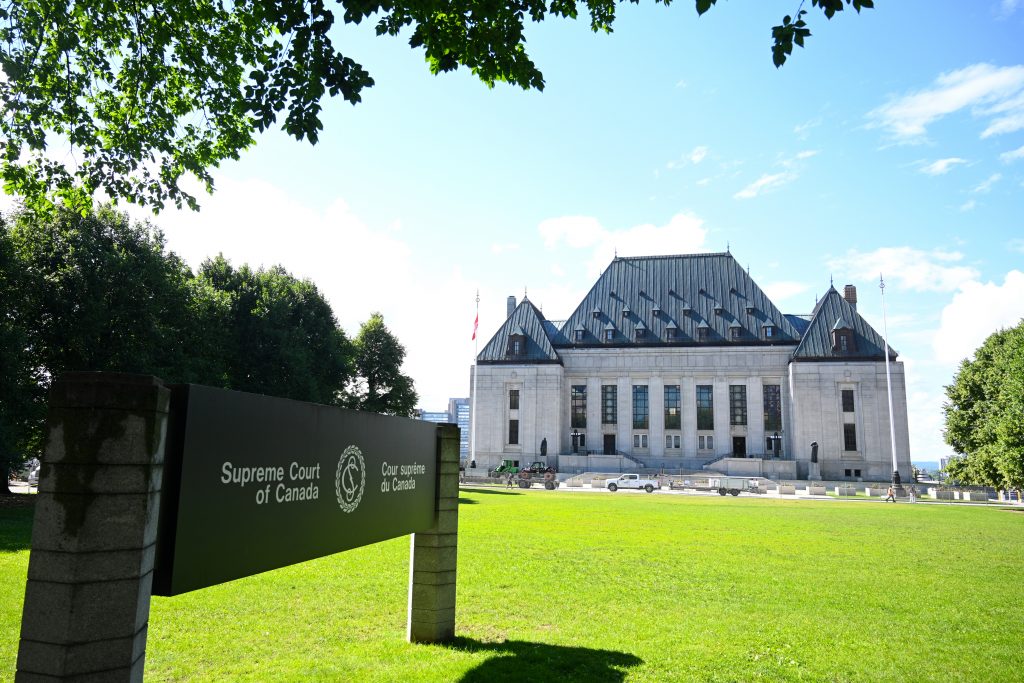
Section 718.2(e) of Canada’s Criminal Code requires judges to consider punishments other than jail “with particular attention to the circumstances of Aboriginal offenders.” In R. v. Gladue (1999), the Supreme Court decreed that “the serious problem of overrepresentation of aboriginal people in prisons” should be solved by judges imposing fewer and shorter jail sentences on aboriginal offenders. This decree was based on the court’s belief that the circumstances of aboriginal people are unique. The court admitted openly that “the jail term for an aboriginal offender may in some circumstances be less than the term imposed on a non‑aboriginal offender for the same offence.”
As a status Indian under the Indian Act, and as an aboriginal under Section 35 of the Constitution Act 1982, Wilson was entitled to a Gladue report, on which the judge relied when imposing sentence. Wilson’s Gladue report claimed that his death-causing dangerous driving resulted from his alcohol abuse and unhealthy relationships, which in turn were caused by his “major disconnection” from his aboriginal culture while growing up.
After killing Sierra Beverly and permanently crippling her mom in 2022, Wilson began to acquire the aboriginal culture from which he’d been “disconnected.” He spent time in nature, gardening, fishing, and learning about traditional medicines. He says these activities “are helping me with my culture and that’s kind of what I’m learning.” Wilson enjoys the “positive impact on his life and well-being” thanks to “culture teachings and traditional practices.”
The sentencing judge asserted that Mr. Wilson’s culture “was taken from him and his family in a systematic fashion by the Government of Canada.”
However, aboriginal Canadians are not unique when it comes to losing their cultures and languages. Millions of first-generation and second-generation immigrants in Canada have experienced a “major disconnection” from their culture. Over the centuries, immigrants who came to this land from Asia, Europe, and Africa have all needed to adjust to Canada’s climate, culture, and economy. Immigrants have had to learn English or French in order to survive and (eventually) thrive.
Numerous immigrants to Canada—and their descendants—have suffered all manner of injustice. The internment of Ukrainian Canadians in labour camps during World War I, the internment of Japanese Canadians during World War II, and Chinese immigrants being paid a fraction of what Europeans were paid when building Canada’s railways, are just three examples of the many tragic stories that fill many books. Inter-generational trauma afflicts members of many different ethnic groups in Canada, including aboriginals.
Further to a race-based clause in the Criminal Code and a Gladue report, Darris Wilson received the lighter sentence of house arrest, not jail time, because he is aboriginal. The judge provided no other reason.
Imposing a lighter sentence on an aboriginal because he is aboriginal is racist. It reminds one of apartheid (“apartness” in the Afrikaans language), South Africa’s system of racial segregation. From 1948 to the early 1990s, all South Africans were legally designated as “Black,” “White,” Coloured,“ or ”Indian.” A citizen’s formal racial designation determined where she or he could live, work, move, and simply be. Non-whites could not enter or use whites-only public facilities. Apartheid permeated all of society: trains, ambulances, hospitals, schools, unions, swimming pools, fitness facilities, theatres, restaurants, and hotels. Non-whites were required to carry official government-issued documents to authorize their presence in white areas.
In the 1980s and early 1990s, Canadians were at the forefront of international opposition to apartheid, in spite of having created and enforced our own race-based laws in Canada.
Canada’s Constitution Act, 1867 (formerly the British North America Act), actually lists “Indians, and Lands reserved for the Indians” as a topic of concern for government, alongside “the Regulation of Trade and Commerce,” “the Postal Service,” and “Municipal Institutions in the Province.” Today, the federal government still has jurisdiction over “Indians,” as though aboriginals are like “the Census and Statistics,” the “Criminal Law,” and “Militia, Military and Naval Service, and Defence.”
The French and British were seeking to address the severe technology gap that existed between a nomadic hunter-gatherer society and an economy based on agriculture and industry. When the French and British came to North America, the aboriginals didn’t have a written language. Tools were made of animal bones. Clothes and shelter were made of animal skins. They had not invented the wheel. In what is today’s Canada, with the exception of some permanent buildings in Ontario and B.C., most aboriginals were nomads, moving from place to place in search of game and other food.
Parliament passed the Indian Act in 1876. It replaced the Gradual Civilization Act, which facilitated granting farmland to individual aboriginals, to promote private land ownership. The preamble to the Gradual Civilization Act described its purpose as “the gradual removal of all legal distinctions between [the Indian Tribes] and Her Majesty’s other Canadian Subjects, and to facilitate the acquisition of property and of the rights accompanying it, by such Individual Members of the said Tribes.”
Human history is rife with examples of tribes, ethnic groups, nations, and empires which enslaved or exterminated each other. Compared to genocide, which the victorious often inflicted on the vanquished, the alternative of integration and assimilation is compassionate and humane.
Today there is no technology gap between aboriginal Canadians and Canadians whose ancestry is Asian, European, or African (or any combination thereof). Regardless of race, Canadians live in houses that are heated by gas or electricity or both. We have indoor flush toilets. We drive cars. We use the internet. We often spend too much time staring into a small rectangular screen that provides endless entertainment. We have ample opportunity to learn English or French (or both languages, for the ambitious). With few exceptions, all Canadian children have ready access to elementary schools and high schools, and the right to attend universities. In 2026, the circumstances of aboriginal people are no longer unique.
Many Canadians—of all races and ethnicities—abuse alcohol and have unhealthy relationships. No doubt both of these factors contribute to higher rates of criminal behaviour. Poverty, alcoholism, abuse, and family dysfunction can be found among all ethnic groups in Canada, including aboriginals.
In Canada in 2026, there is simply no need for race-based laws, ethnic-based policies, or ancestry-based rules. Aboriginal and treaty rights can be—and should be—recognized and affirmed without race-based laws that cause division and resentment amongst Canadians.
The surest way to truth and reconciliation is to embrace the ideal of equal rights for all, special privileges for none. It’s time to repeal the Indian Act, end race-based access to public land (like at Joffre Lakes Park), stop imposing hypocritical virtue-signalling land acknowledgements at public meetings, and refrain from signing race-based land deals like the Musqueam Agreement.
Last but not least, Parliament should remove racism from the Criminal Code and end the disgusting spectacle of race-based sentencing that sees criminals like Darris Wilson receiving a lighter sentence just because of his aboriginal ancestry and ethnicity.
John Carpay, BA, LLB, is President of the Justice Centre for Constitutional Freedoms.