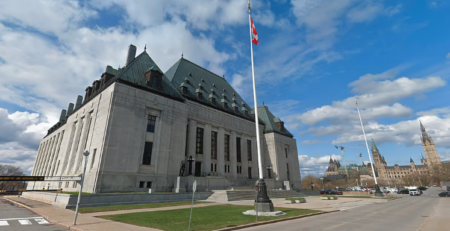
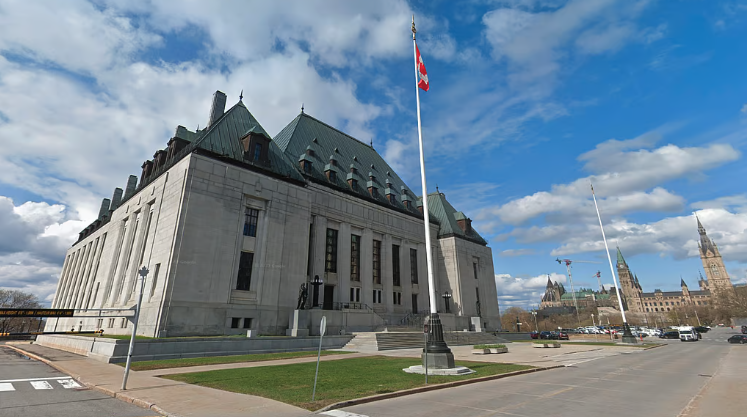
The Supreme Court of Canada has now finished listening to arguments from the federal government about watering down section 33 of the Charter, the notwithstanding clause. Last week, the Supreme Court heard arguments from the federal government, provinces and a multitude of interveners in a case pertaining to Quebec’s Bill 21, which bars a large swath of “public” officials (including school teachers and lawyers) from wearing a visible religious symbol.
Some argue that Charter section 33 allows Parliament and provincial legislatures to “override” certain Charter rights and freedoms. However, it’s not that simple. Politicians and judges have different opinions about what Charter rights and freedoms mean, and exactly how the Charter should apply to laws.
For example, Alberta passed a law to protect children and teenagers from harmful transgender ideology, requiring parental consent if minors want to embark on a gender transition. An activist judge struck down Alberta’s law and ruled that children have a Charter right to keep their own parents in the dark about what is happening to them at school. Alberta responded by using Charter section 33 to opt out of this absurd political court ruling. Thanks to section 33, Alberta was able to keep a sensible and necessary law on the books.
In 2017 the Saskatchewan government used Charter section 33 to opt out of an outrageous court ruling that, if allowed to stand, would have forced about 10,000 non-Catholic students out of the Catholic schools which their parents (and presumably the students themselves) wanted to attend.
In 2018, the Ontario government used the notwithstanding clause to opt out of a court ruling which declared – absurdly – that reducing the number of Toronto’s voting districts from 47 down to 25 somehow violated free expression and the right to vote. Reducing the number of seats on City Council certainly imposed severe hardship on candidates who had already started campaigning, but this downsizing did not violate anyone’s right to vote or to speak freely.
Some of Canada’s judges are woke ideologues, committed to the neo-Marxist ideals of diversity-equity-inclusion. They are eager to impose their progressive politics on Canada from the bench. Canadians cannot use the ballot box to defend themselves against ideological rulings by neo-Marxist judges.
Charter Section 33 allows elected representatives to opt out of court rulings that are political, ideological, short-sighted, foolish, or outrageous.
Section 33 is not contrary to the Charter, it is an integral part of the Charter. Without section 33, the Charter would never have been added to Canada’s Constitution way back in 1982. The Prime Minister at the time, Pierre Trudeau, described Charter section 33 as “a way that the legislatures, federal and provincial, have of ensuring that the last word is held by the elected representatives of the people rather than by the courts.”
I find it odd that the people who complain about Charter section 33, which protects Canadians from judicial tyranny, almost never complain about Charter section 1.
Section 1 of the Charter allows judges to approve of laws that violate our fundamental freedoms of expression, association, conscience, religion, mobility, and peaceful assembly. During lockdowns, governments admitted in court that their health orders and mandatory vaccination policies did violate Charter rights and freedoms. Judges used Charter section 1 to approve of these violations, by writing the media narrative into their court rulings and by not seriously considering the evidence placed before them.
If we’re going to remove section 33 from the Charter, perhaps we should remove section 1 as well
Changing the Charter requires the approval of our federal Parliament as well as approval by the Legislatures of seven provinces which have more than 50% of Canada’s population. That is the honest way to constitutional change. For the Supreme Court of Canada to try to change the Constitution from the bench, by way of a court ruling, would be a radical violation of our constitution by the Supreme Court. Let’s hope that the Supreme Court will reject the federal government’s arguments to water down Charter section 33.
John Carpay, B.A., LL.B., is president of the Justice Centre for Constitutional Freedoms (jccf.ca).