Northwestern Ontario former indigenous chief challenges banishment as unconstitutional

Share this:

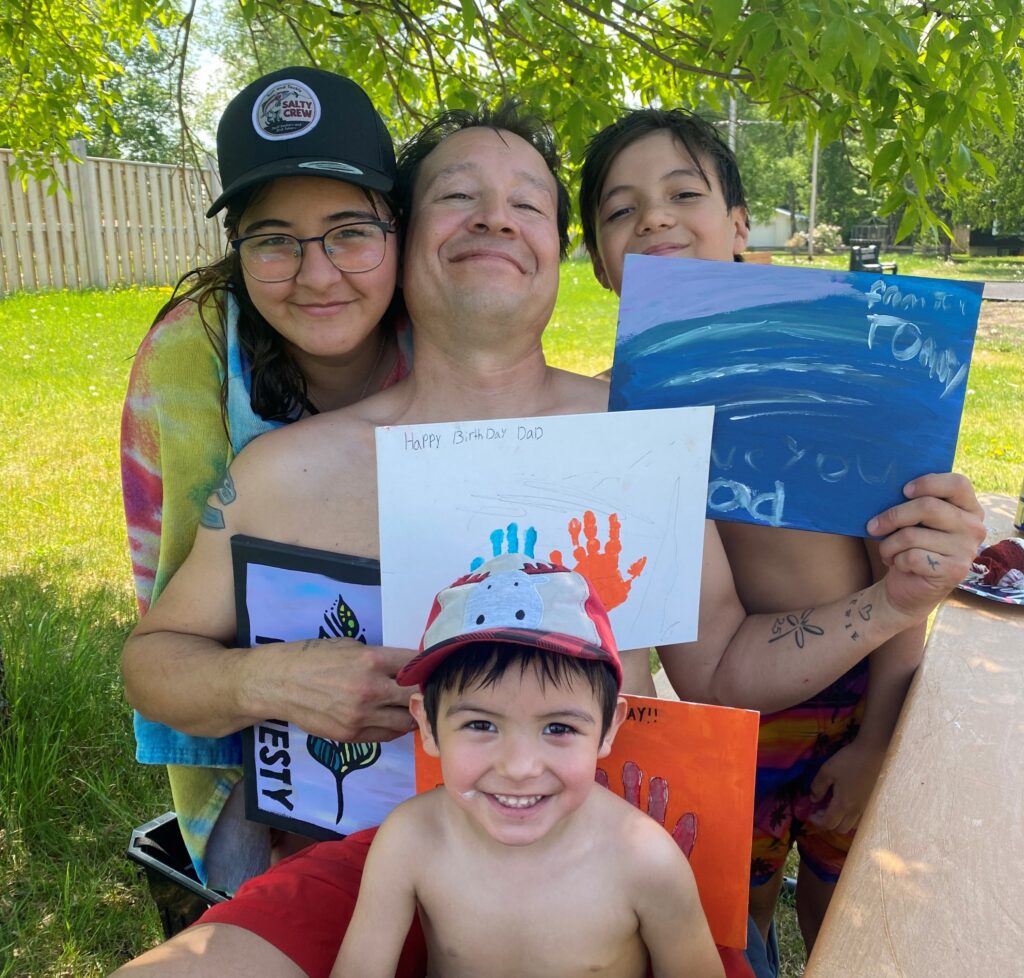
Doug Riffel (centre) with children Willow, Tommy, and Hunter (Courtesy of Doug Riffel)

Northwestern Ontario former indigenous chief challenges banishment as unconstitutional

Doug Riffel (centre) with children Willow, Tommy, and Hunter (Courtesy of Doug Riffel)

Share this:

KENORA, ONTARIO: The Justice Centre for Constitutional Freedoms announces that lawyers are preparing to file a lawsuit challenging the banishment of Doug Riffel from Wabauskang First Nation (WFN) territory, arguing that the decision is unconstitutional, unlawful, and procedurally unfair.

Mr. Riffel, a member and multiple-term former councillor and Chief of WFN, was banished in June 2025 by Band Council Resolution (BCR) on the stated basis of “public safety” following criminal charges laid against him in August 2024. Those charges were withdrawn in March 2026, just two hours into the complainant’s trial testimony. Mr. Riffel has no criminal record or history of violence.

At the time of the banishment, Mr. Riffel had been released on recognizance for 10 months without incident, while the complainant lived approximately 90 kilometres away from WFN territory.

Mr. Riffel was given no prior notice of the decision and no opportunity to respond before being expelled from his community.

Lawyers funded by the Justice Centre previously sent a warning letter to WFN in February 2026, stating that the banishment was “unlawful and unconstitutional” and requesting that it be rescinded immediately.

The letter further explains that “a First Nation band council cannot simply banish band members at will,” and that a BCR, without a supporting bylaw enacted under the Indian Act, “does not carry the authority of the Indian Act, and is unenforceable.”

Lawyers are currently finalizing a statement of claim to be filed in the Ontario Superior Court of Justice in Kenora. The lawsuit will seek declaratory relief, along with damages under the Charter.

This case raises important questions about the presumption of innocence, and the obligation of all public bodies, including indigenous councils, to respect the rights guaranteed by the Charter.


Share this:

Surveillance (Courtesy of Gorodenkoff)

Epoch Times: ‘Grave Threat to Privacy’: Resistance to Lawful Access Bill Mounts

Why do Canadians cherish privacy in the first place? If a person has nothing to hide, why should they care...
Dr. John Robson delivers the Justice Centre's national petition opposing Bill C-22 to the Prime Minister of Canada (Courtesy of Dr. John Robson)

42,344 Canadians call on Parliament to stop Bill C-22 surveillance legislation

OTTAWA, ON: The Justice Centre for Constitutional Freedoms announces that it has delivered a national petition signed by...
Human Rights tribunal (Courtesy of Roy Grogan)

Epoch Times: Human rights laws should respect the human right to speak freely

Human rights legislation in Canada was originally passed to narrowly address discrimination in areas such as employment, housing, and services....

Explore Related News

Dr. John Robson delivers the Justice Centre's national petition opposing Bill C-22 to the Prime Minister of Canada (Courtesy of Dr. John Robson)
Read More
Matt and Nicole Alexander (Courtesy of Alexander family)
Read More
Disciplinary committee meeting (Courtesy of C Monk)
Read More
Dr. John Robson delivers the Justice Centre's national petition opposing Bill C-22 to the Prime Minister of Canada (Courtesy of Dr. John Robson)
Matt and Nicole Alexander (Courtesy of Alexander family)
Disciplinary committee meeting (Courtesy of C Monk)
Correctional facility (Courtesy of Jeffrey Zalesny)