OTTAWA, ON: The Justice Centre for Constitutional Freedoms announces that Jasmin Grandel and Darrell Mills intend to take their constitutional challenge to Saskatchewan’s Covid gathering restrictions to the Supreme Court of Canada. On May 15, 2024, the Saskatchewan Court of Appeal dismissed their case. Today, our lawyers applied for leave to appeal their case to Canada’s highest court in a potentially precedent-setting case about the freedom of peaceful assembly.
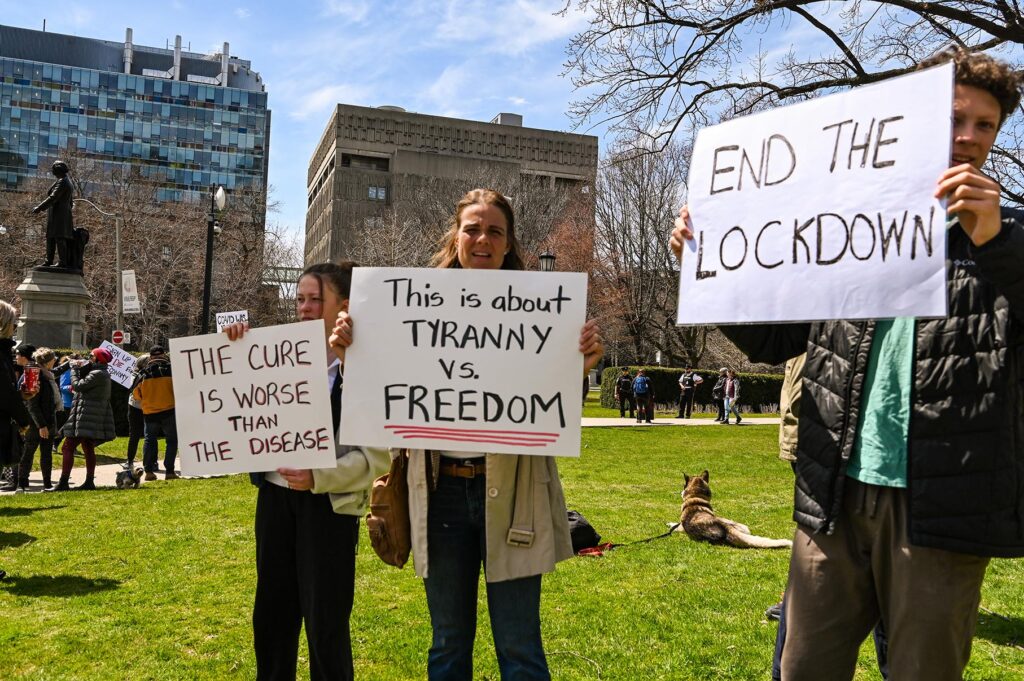
On December 19, 2020, Ms. Grandel and Mr. Mills participated in a peaceful protest against the Government of Saskatchewan’s Covid lockdown measures at the Vimy Memorial in Saskatoon’s Kiwanis Park. Police ticketed them for attending a protest exceeding Saskatchewan’s 10-person outdoor gathering limit.
Jasmin Grandel, a young mother, attended peaceful protests to express her concerns about the lack of transparency surrounding government restrictions. She was especially concerned about the requirement that her son wear a mask in kindergarten.
Darrell Mills, certified in Mask Fit Testing and trained in supplied air breathing systems, also attended peaceful demonstrations to voice his concerns about improper mask usage and the significant burdens mask mandates placed on persons with physical or psychological conditions.
On April 7, 2021, our lawyers filed a constitutional challenge to these gathering restrictions at the Saskatoon Court of Queen’s Bench on behalf of Ms. Grandel and Mr. Mills. They argued that the gathering restrictions violated their freedoms of expression, peaceful assembly, and association – protected by the Canadian Charter of Rights and Freedoms. That challenge was heard by the Court on June 29, 2022.
Unfortunately, while it was conceded that the gathering restrictions did limit their freedom of expression, the Court ruled that the limitation was justified. Further, the Court found that, because the limitation on freedom of expression was justified, the limitations on the freedoms of peaceful assembly and association were also justified without the need for independent analysis of those rights.
Ms. Grandel and Mr. Mills were not deterred, appealing that decision on August 14, 2023. In yet another setback, however, their appeal was dismissed on May 15, 2024, by the Court of Appeal for Saskatchewan in a unanimous decision upholding the lower Court’s findings.
They are now asking the Supreme Court of Canada to hear their case. On August 14, 2024, our lawyers filed a Notice of Application for Leave to Appeal to the Supreme Court. If granted, they will argue that Saskatchewan’s Covid gathering restrictions were primarily an unjustifiable limitation of the freedom of peaceful assembly, which was not centrally considered. The Supreme Court has an opportunity to develop a more robust legal framework for addressing limitations to that freedom.
Our lawyers argue that, in many cases where the government has violated multiple Charter freedoms, particularly the freedoms of expression, assembly and association, courts tend to focus on limitations to freedom of expression only. In other words, courts tend to find an independent analysis of violations of other rights unnecessary. If a court finds that the government justifiably limited freedom of expression, they tend to find that the government justifiably limited the freedom of peaceful assembly if it were to have been infringed.
Canadian courts ought to develop a test for addressing violations to the freedom of peaceful assembly. Today, two Saskatchewan citizens have asked the Supreme Court to develop such a test and to apply it to gathering restrictions that impacted more than a million residents. If this case is heard by the Supreme Court, it could have a profound impact on the fundamental freedoms of Canadians.
Lawyer Andre Memauri says, “Our request for leave to appeal in this matter seeks to address concerns with how Charter violations are addressed within the section 1 analysis, when numerous Charter violations are engaged. Additionally, there exists a void in jurisprudence with respect to a test in how to address the guarantee of peaceful assembly directly, and we are hoping the Supreme Court of Canada provides guidance on this increasingly important matter to Canadians.”