
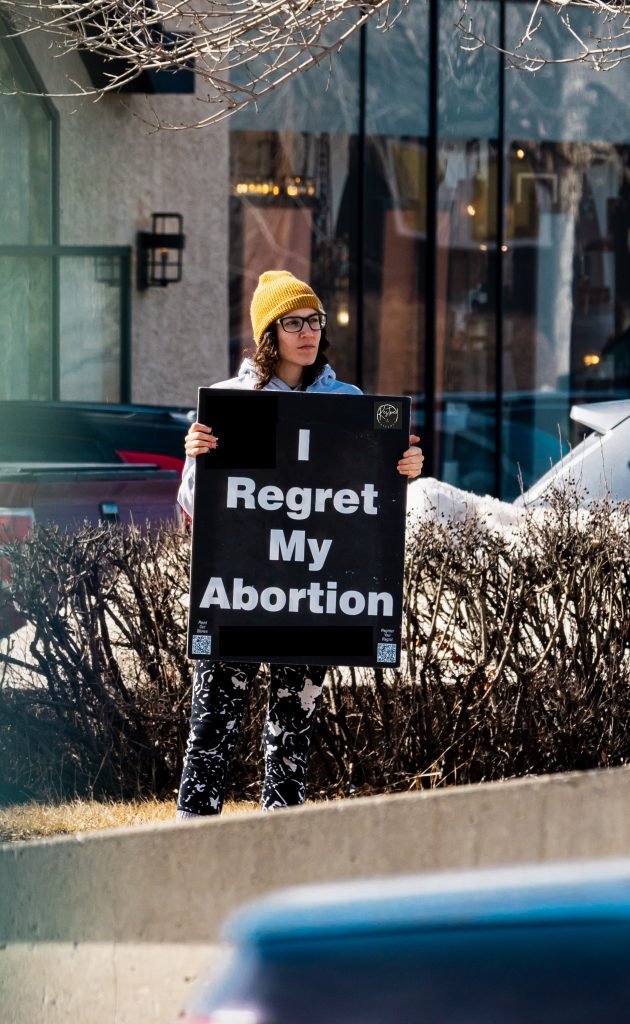
CALGARY, AB: The Justice Centre for Constitutional Freedoms announces that lawyers we fund will defend Jocelynn Rodrigues, who received a violation ticket for allegedly engaging in “interference” within a restricted access zone. Such restricted access zones, commonly called “bubble zones,” are the result of Alberta’s Protecting Choice for Women Accessing Health Care Act. They generally extend 50 metres around designated facilities providing abortion services. The Alberta government that introduced this legislation in 2018 said it would protect access to abortion services and the safety of patients and providers.
Ms. Rodrigues describes her work as a “sidewalk ministry.” The law defines “interference” broadly, including advising or attempting to persuade someone not to use abortion services. The definition also covers providing or attempting to provide information about issues related to abortion services, whether through words, written materials, or images.
Justice Centre-funded lawyer Elsa Michel says Ms. Rodrigues could face a fine of up to $5,000, imprisonment for up to six months, or both, if convicted. She explains that the current law restricts peaceful conversations and the sharing of information, activities protected by freedom of expression under section 2(b) of the Charter.
“This egregious ‘bubble zone law’ violates freedom of expression. Women like Ms. Rodrigues are simply trying to provide information and pray peacefully outside abortion clinics, but this law puts them at risk of punishment for doing so,” said Ms. Michel. “The bubble zone law also infringes the Charter right of those seeking to access abortion services to receive offers of support or information related to abortion.”
Ms. Rodrigues’ first court appearance is scheduled for December 8, 2026, at the Alberta Court of Justice, where she is expected to enter a plea and have a trial date set.
The Justice Centre is Canada’s leading civil liberties organization defending Charter rights and freedoms in the courts of law and in the court of public opinion. Founded in 2010, the Justice Centre funds lawyers across Canada, relies entirely on voluntary donations to carry out its mission, and issues official tax receipts to donors.