
There is a major difference between showing identification and surrendering part of your identity to a government-controlled system.
A passport can expire. A driver’s licence can be cancelled. A compromised password can be changed.
Your face cannot. Neither can your fingerprints or your eyes. That is why Canadians should pay close attention to the Canadian Air Transport Security Authority’s (CATSA) plans for biometric screening at airports.
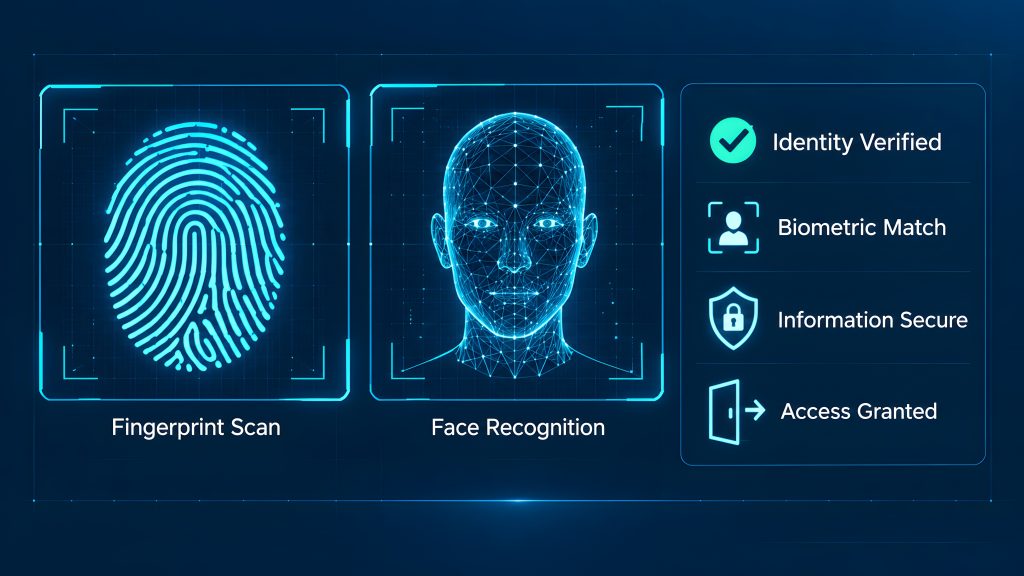
CATSA says it is working with Transport Canada to explore imposing biometric technology on Canadians at security checkpoints for domestic flights. Its 2026 corporate plan says such technology could eventually be used in pre-board screening, with the stated goal of “improving efficiency.”
That may sound like a modest technological upgrade. It is not. The introduction of biometric screening would create infrastructure capable of collecting and processing information that is uniquely and permanently tied to individual Canadians. Once that infrastructure exists, what use will future governments make of it? A promise from today’s government does not need to be honoured by future governments.
Ottawa currently has no formal plan for a mandatory national digital identification system or a centralized national biometric database. Good. But no present government can bind every future government.
Policies change. Cabinets change. Laws change. Technologies created for narrow purposes acquire broader ones.
That is why Canadians should reject assurances that biometric screening will be optional or limited.
“Voluntary” is a political description, not a technological safeguard. We learned that distinction only too well during Covid and lockdowns.
When the Covid vaccine was first introduced in early 2021, politicians and public health officials repeatedly emphasized that vaccination would be voluntary. Alberta Premier Jason Kenney was among those who publicly rejected mandatory vaccination and described coercive vaccination policies as incompatible with basic rights.
Only months later, the same governments punished the people who refused the jab with second-class citizenship. Employment, travel, attending university, using the gym, visiting elderly parents in nursing homes … important aspects of life were denied to good people who reasonably chose not to get injected. Something can be voluntary at the moment it is introduced and much less voluntary once the infrastructure, rules, and political incentives change.
The same caution should apply to biometrics. If Canadians accept facial scans at airports because government says they are convenient and optional, what prevents a future government from making them a requirement for flying? What prevents the system from being connected to other databases? What prevents information collected for one purpose from being used for another?
The answer cannot simply be: “The government says it won’t.” Before building such a system, Ottawa should first explain why Canadians need it.
CATSA says biometrics could improve efficiency. But the efficiency case is far from obvious. Anyone who flies regularly knows that identity verification is not what makes boarding an airplane slow. Showing a passport or driver’s licence takes a few seconds. Then passengers spend far longer inching through the bridge to the aircraft, waiting while people stop in the aisle to remove jackets, arrange carry-on bags and wrestle suitcases into overhead compartments.
Imagine that a biometric scanner can identify me in two seconds and a human employee requires five. The system has saved three seconds. Then I stand in line for several minutes because somebody six rows ahead is trying to find space for a carry-on bag. What problem has been solved?
If airlines wanted to make boarding substantially faster, they could examine how passengers are called to board, how carry-on baggage is handled and why people seated near the back are often made to pass through rows of passengers already trying to settle into their seats.
Those are genuine operational questions. By comparison, shaving a few seconds off an identity check hardly seems to justify the collection of permanently identifying biological information. And that is the heart of the issue. Government should not collect more information about Canadians simply because new technology makes this collection possible.
Today, when I show an airline employee my driver’s licence, the employee looks at the card, confirms my identity and returns it. There is no need to retain a digital model of my face. There is no need to keep my fingerprints. There is no need to store an iris scan. Biometric systems create an entirely different relationship between traveller and state.
Once information is captured, basic questions immediately arise. Who holds it? Where is it stored? How long is it retained? Who can access it? Can government departments share it with one another? Can private contractors access it? Can it be matched against other information? Can the original purpose be expanded later? And what happens when the database is breached.
Governments and corporations routinely assure the public that sensitive data are secure, but databases are breached nonetheless. No system is immune from hacking, human error, insider misuse, or simple incompetence.
The consequences are especially serious when the information cannot be replaced. If somebody steals my credit card number, I can cancel the card. If somebody gets my password, I can change it. If somebody obtains the biometric data used to identify me, I cannot change my face. That is why the safest biometric database remains the one that was never created.
Canadians should also consider the surveillance potential of facial recognition technology. A facial scan at an airport may be presented as little more than an automated ID check. But facial recognition is not limited to airport counters. Combined with cameras and increasingly sophisticated software, the same underlying technology can be used to identify and track people in public places without requiring them to stop and present identification.
That changes the privacy equation considerably. A person walking down a street has traditionally been able to move through public space without automatically generating a government-readable record of his identity and movements. A sufficiently developed facial recognition network makes that far less certain.
Again, the concern is not that every airport scanner will immediately become a tool of mass surveillance. The concern is that building biometric infrastructure expands what government is capable of doing. A free society should care about capability as well as current intention.
Canada’s Supreme Court has long recognized the privacy of our personal information as protected by section 8 of the Canadian Charter of Rights and Freedoms. However, we should stop bad laws and policies from being implemented in the first place, rather than placing our hopes in a court striking them down after they have been passed into law.
If it ain’t broke, don’t fix it. A passport or driver’s licence already establishes who I am, so there is no need for government authorities to obtain my facial scan or my fingerprints in order for me to travel domestically.
Canadians should not have to surrender permanent biological identifiers merely because government has found a new technology capable of collecting them.
Nor should they have to choose between protecting deeply personal information and maintaining the practical ability to travel within their own country.
John Carpay, BA, LLB, is President of the Justice Centre for Constitutional Freedoms.
Read this column in Juno News
Juno News: The push for airport biometrics should concern everyone
Published:
Media inquiries: media@jccf.ca
~6 min read aloud
Surveillance expanding across North America
Facial recognition is quietly becoming normal everywhere. Airports, stadiums, concerts, office buildings, and more.
— Orwell Day (@OrwellDay) September 17, 2026
-----
The Walt Disney Company's implementation of facial recognition at Disneyland entrances poses a real risk of non-consensual biometric extraction.
A $5… pic.twitter.com/3PNmT8i8Ag
John Carpay speaks out
Associated cases
No results found.