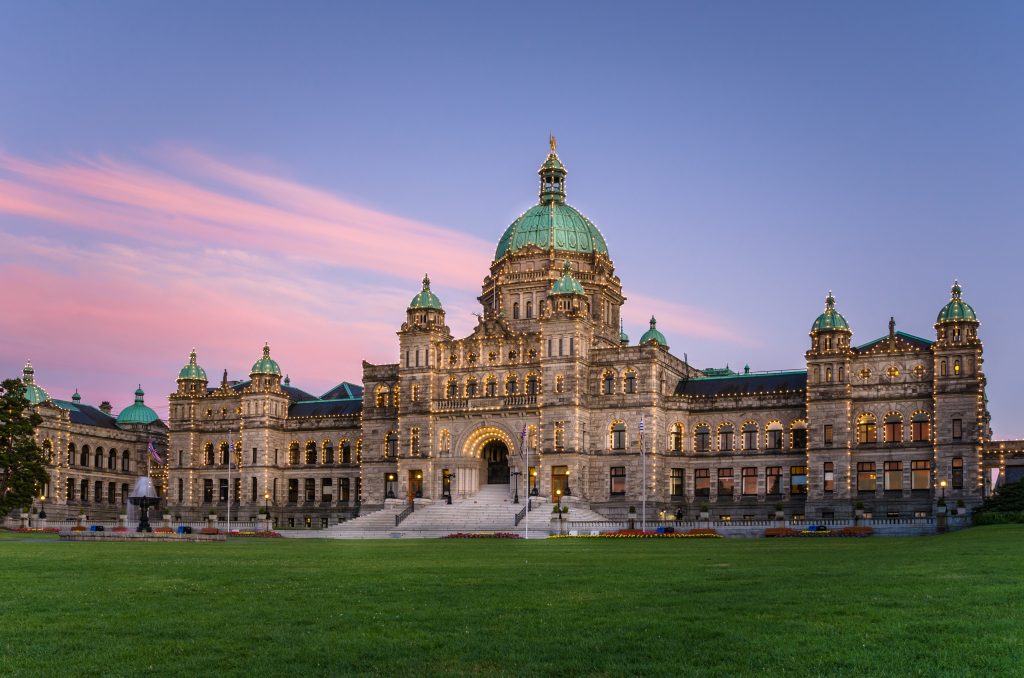
There are several issues that British Columbians should consider before casting their ballots in the provincial election on October 24. Those who want speech protected, property rights respected, education and healthcare improved, and government held accountable should use this election to demand it.
Voters should press candidates to end the censorship of speech by repealing section 7 of the BC Human Rights Code. Under section 7, former Chilliwack school board trustee Barry Neufeld, who advocated for protecting children from transgender ideology, was ordered to pay $750,000 to offended LGBT teachers. Repealing section 7 will prevent this type of overreach from the BC Human Rights Tribunal.
Homeowners worried about their private property rights should choose candidates who will repeal the Declaration on the Rights of Indigenous Peoples Act (DRIPA). This would not end all Aboriginal title disputes, but it would end the provincial requirement to align BC laws with United Nations standards and stop the government from entering shared decision-making agreements with First Nations.
Voters should demand that government justify any seizure of private property. Since 2023, BC’s Civil Forfeiture Act has forced owners to prove they can keep their own property. The government can seize your house, car, or other property if it decides that your known legal income doesn’t look high enough to have paid for it — and then you must prove that you’re entitled to keep it. Candidates who will reverse that burden deserve support.
The Labour Relations Code should also be amended so employees with irreconcilable differences can hire their own counsel and pursue a grievance at their own expense. The union representing Jim McMurtry, an Abbotsford teacher who was fired for discussing the unsubstantiated Kamloops mass-grave claim with his students, refused to take his grievance to arbitration. The Labour Relations Board dismissed his bad-faith complaint, saying it is not the Board’s role to decide who is “right.”
In fact, many professionals, including doctors, nurses, teachers, and lawyers, risk disciplinary action for speaking even while off the clock. This happened to Amy Hamm, who is still undergoing disciplinary proceedings and an appeal after the BC College of Nurses and Midwives found her guilty of unprofessional conduct for questioning gender ideology on social media. Alberta’s Regulated Professions Neutrality Act serves as a model for BC legislation that can stop regulatory bodies from imposing ideology on members.
Voters wanting to get the gender ideology business out of schools should elect a government that wants to get SOGI (sexual orientation and gender identity) out of the curriculum. SOGI is presented as an anti-bullying measure while simultaneously dividing students by sexual orientation, race, and religion. An anti-bullying policy should apply equally to everyone.
When it comes to healthcare, it’s no secret that BC’s waitlists are getting longer with each passing year. Voters should elect a government that’s willing to provide patients with a greater degree of autonomy by allowing out-of-pocket payments for prompt access to medically necessary treatment. A ten-month waitlist is not healthcare.
Voters can restore greater independence for health professionals by electing candidates who will repeal Bill 36. The law expands government control over regulatory colleges and their disciplinary powers, raising concerns that advice from doctors and other professionals could be shaped more by political direction than by professional judgment.
As for transparency, British Columbians should press candidates to reverse recent changes to the Freedom of Information and Protection of Privacy Act. The law already lets public bodies reject “frivolous or vexatious” requests. New provisions allow refusal based on “the behaviour of the applicant,” which risks discarding valid requests from peaceful citizens and gives bureaucrats too much power.
Finally, voters should support candidates presenting a clear process for open debate before historical statues and monuments are taken down. Victoria removed a statue of Sir John A. Macdonald in 2018. Streets named after Joseph Trutch were renamed in Victoria and Vancouver in 2022 and 2025. Citizens had no meaningful say in these decisions.
The choices made on October 24 will decide whether British Columbia protects these freedoms or continues in the opposite direction.
John Carpay, BA, LLB, is President of the Justice Centre for Constitutional Freedoms.
Read this column in the Western Standard