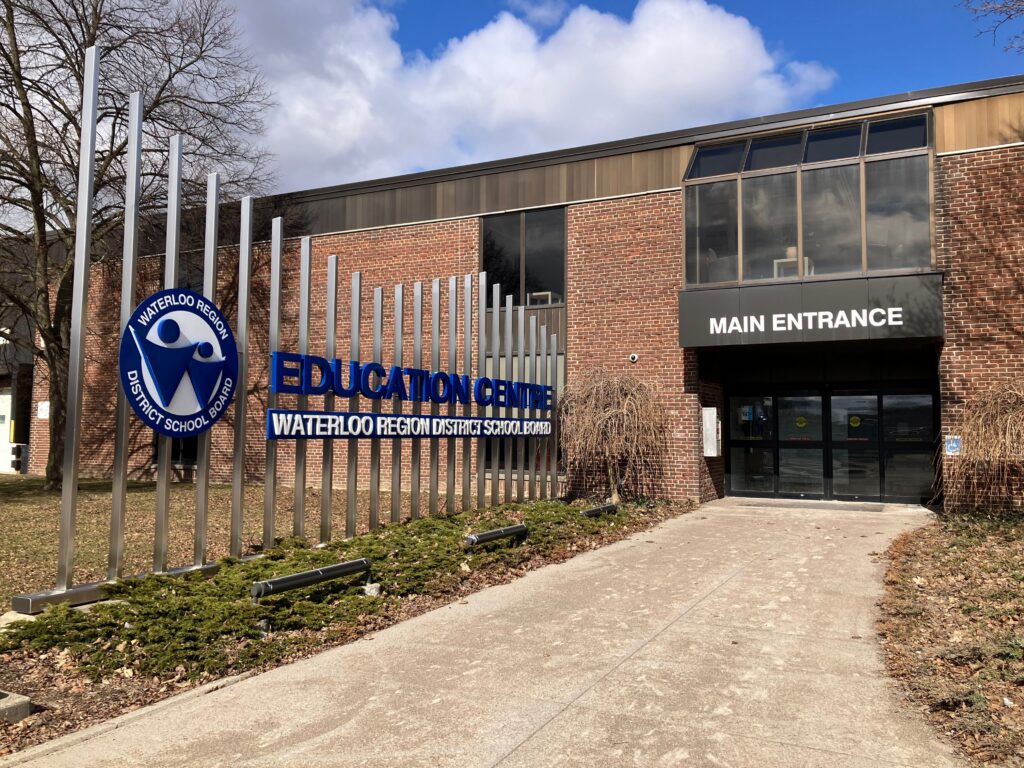
WATERLOO, ON: The Justice Centre for Constitutional Freedoms announces that the Waterloo Region District School Board has no authority to order school councils to read land acknowledgements at school council meetings, according to the Ontario Superior Court of Justice.
The Court issued its decision on November 25, 2026.
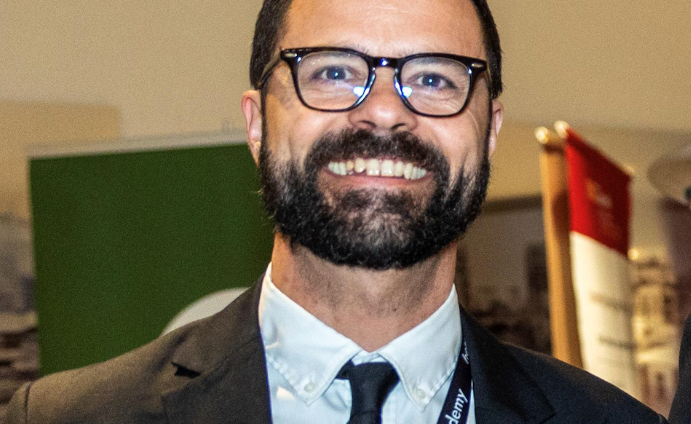
Dr. Geoffrey Horsman is a biochemistry professor, father of three, and a member of the Kitchener-Waterloo Collegiate and Vocational School Council (KCI Council). The KCI Council began opening its meetings with land acknowledgements, but the practice had never been voted upon or discussed. In early 2025, Dr. Horsman requested that the practice be debated at a future council meeting.
On May 9, 2025, a school official informed Dr. Horsman that the Waterloo Region District School Board (WRDSB) required land acknowledgements at all school council meetings and that the topic could not be debated. Further correspondence from the Board’s System Administrator of Equity and Inclusive Education, Vinay Tiwari, confirmed that land acknowledgements were mandatory and that school councils were barred from questioning or discussing the practice.
In an October 29, 2025 email, the Board stated that “territorial acknowledgements will continue to be part of School Council and WRDSB gatherings,” adding that questioning equity-focused initiatives “risks undermining the dignity of members of our community.”
With help from the Justice Centre, Dr. Horsman asked the Court to strike down the WRDSB’s decision.
Dr. Horsman’s legal challenge argued that mandatory land acknowledgements are contrary to his belief in the inherent dignity and equality of all people and thus violate his freedom of conscience – protected by section 2(a) of the Canadian Charter of Rights and Freedoms. He also argued that the prohibition on debating the topic violated his right to freedom of expression protected by section 2(b) of the Charter.
While the Court did not address the Charter issues in its November 25 decision, the Court did rule that the WRDSB’s decisions to impose mandatory land acknowledgements on school councils “were made without jurisdiction and are of no force.”
The Court ordered the KCI Council to reach “its own decision” about the practice of land acknowledgements and to determine whether it will allow debate on the matter.
Dr. Horsman said, “Parents are ultimately responsible for their children’s education, and the Education Act recognizes that parents must hold public schools accountable—not the other way around. I’m grateful that the court upheld the Education Act, and I’m deeply thankful for the assistance of the Justice Centre.”
Constitutional lawyer Hatim Kheir stated, “We are pleased to hear that the independence of school councils has been affirmed. This is an important vehicle for parents to voice their concerns and hold school boards accountable. Now the KCI Council can decide for itself if it should open meetings with land acknowledgements.”
The Justice Centre is Canada’s leading civil liberties organization defending Charter rights and freedoms in the courts of law and in the court of public opinion. Founded in 2010, the Justice Centre funds lawyers across Canada, relies entirely on voluntary donations to carry out its mission, and issues official tax receipts to donors.